

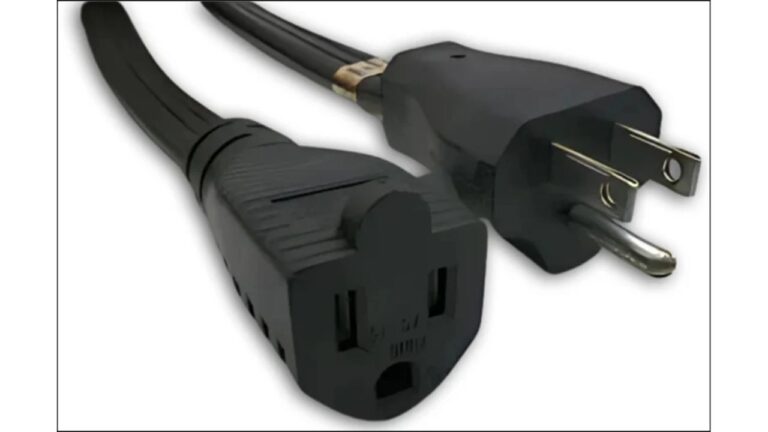
Cables on the floor are easy to ignore until they start getting in the way. Their effect can be felt when stepping over them, when a chair leg strikes them, or when something is pulled loose behind furniture by a vacuum. The clutter becomes a hassle over time, and it slows down daily, mundane tasks.
Making a simple alteration to any room will help eliminate a lot of that friction without the need to replan the room layout or install a cumbersome cable management system. Flat extension cords come closer to the surface, follow edges more cleanly, and minimize tangle and trip points, which are caused by the bulk. The outcome is a more purposeful setup that is more comfortable to live in.
This article explains how flat extension cords make the job easier, keep cords off the floor, and integrate into your modern home design more seamlessly.
1. Low Profile Cable Layout Benefits
The switch to flat extension cords alters the way the power is routed in day-to-day settings, particularly in contrast to round-length cables that naturally roll and slide around. Their architecture ensures that they do not extend into pedestrian areas.
That surface alignment reduces accidental contact points. In real terms, less clutter means fewer raised edges, which in turn means less time a foot, chair leg, or cleaning tool will catch the cable. This enhances both the movement of people and the utilization of the room.
Research on environmental design suggests that the more regular floor surfaces in residential movement paths are made, the more likely they are to prevent trips. This becomes especially relevant in high-traffic areas where the risk of accidental contact increases whenever small obstructions are routinely in the way.
2. Space Optimization Under Furniture
The flat cable geometry enables wires to pass freely without elevation or bending stress in narrow openings in furniture. It is important in a room where sofas, desks, or beds are low to the floor, thereby restricting clearance space.
The flat design keeps cables away from legs and furniture and within the horizontal space. This keeps the space tidier, but it does not alter the interior arrangements. This also helps alleviate stress at connections because the cable is not continually subjected to sharp bends.
A study reveals that when space is used optimally, the interior of a limited space becomes tidier and more ordered. The results also highlight how less spatial interference helps to allow for more efficient movement patterns in smaller indoor spaces.
3. Surface Safety Improvement Factors
The improvements in safety achieved with flat cable systems are primarily physical and not electrical. The reduced vertical profile makes it more resistant to snagging, stepping pressures, and sharply bent points that tend to degrade insulation over time.
If the cord remains flat on a surface, the distribution of its forces is more even. This lessens wear and tear in the local area, which is usually the starting point of cable failure in a domestic setting. It also reduces the occurrence of micro-cracks in the insulation that form at stress points during repeated bending or impact.
This also ensures the same insulation quality in busy areas where countless people may step on it repeatedly, or where fixtures like furniture could crush and compress standard round cables over time, thereby reducing insulation integrity. The reduced deformation risk supports longer service stability in everyday residential conditions.
4. Electrical Load Stability Considerations
Simple extension cords do not affect electrical capacity by themselves. Performance is still defined by wire gauge, conductor quality, and insulation rating rather than shape. This is because the same amperages can be evaluated for two different physical profiles.
In most flat designs, standard copper conductors are used, which have electrical characteristics like those of round conductors of equal specification. The only difference is the distribution of heat and pressure along the cable. This distribution may affect load cooling efficiency during prolonged operating periods.
In use, this translates into safe operation being ensured by fitting the cord that matches the load to be powered and by not allowing the cord to be overextended for too long. Sudden and excessive changes in the load are avoided through proper load management, so that the performance remains stable even under continuous use in the home or office.
5. Practical Home Integration Methods
Flat cables are most effective when planned along the edges of rooms rather than placed randomly after setup. Running them along baseboards or under thin rugs helps maintain both stability and visibility control. This also makes the cable path less intrusive in daily movement patterns.
This approach reduces cable clustering behind desks or entertainment units. It also prevents overlapping cords, which often lead to tangling and unnecessary strain on connectors. Over time, this reduces wear on plug joints and improves connection reliability.
In many home setups, this kind of routing also simplifies future adjustments. When furniture is moved or devices are replaced, the cable path remains predictable, reducing the need for full reconfiguration of the power layout.
Conclusion
Flat extension cord design improves home environments mainly through better physical integration. It reduces clutter, improves movement flow, and lowers common wear points without changing electrical output. The result is a more controlled and predictable use of space in everyday living conditions.
For practical use, focus on high-traffic areas first. Replacing exposed or bulky cable routes with low-profile alternatives immediately improves safety and makes the space easier to maintain daily. Small adjustments in routing often deliver noticeable improvements in both comfort and organization.
