

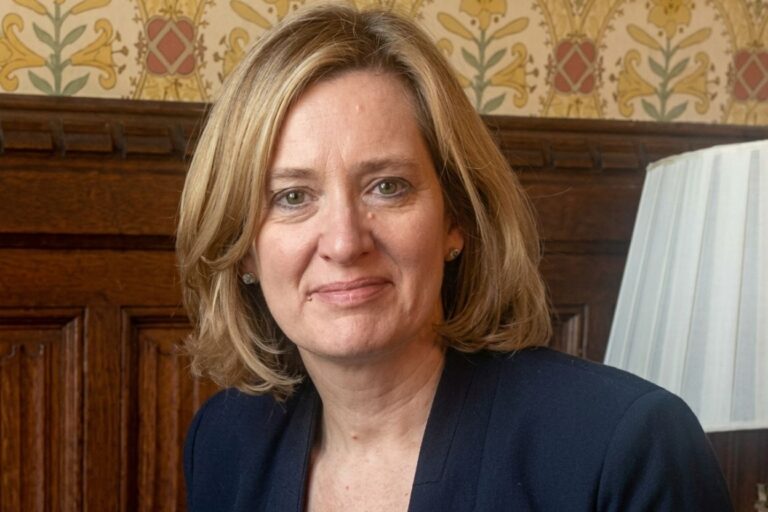
Amber Rudd remains one of the most recognisable figures in modern British politics. Her journey through the corridors of Westminster showcases the intense highs and sudden lows of high-stakes governance. For years, she stood at the centre of the Conservative Party, shaping national policies on climate, welfare, and domestic security. However, her impact extends far beyond her final days in Parliament. Even today, her voice resonates through major corporate boardrooms and global media platforms. This comprehensive biography explores her dynamic career, private life, and ongoing public contributions in 2026.
The Early Foundations of a Political Career
Before she entered the public eye, Amber Rudd built a diverse professional background in the private sector. She attended the University of Edinburgh, where she studied history. Following her graduation, she transitioned into the competitive world of finance and investment banking. She initially worked for J.P. Morgan in both London and New York, gaining crucial economic insights.
In addition to finance, she explored venture capital and financial journalism. This varied background provided her with a unique perspective on British industry. Therefore, when she decided to enter politics, she possessed a deep understanding of corporate systems. She eventually chose to contest the Hastings and Rye constituency. In 2010, she won the seat, officially launching her career as a Member of Parliament.
Tracing Amber Rudd Previous Offices and Achievements
Leading the Department for Energy and Climate Change
Her ascent within the government happened remarkably fast. Prime Minister David Cameron noticed her sharp administrative skills and dedication. Consequently, he appointed her as the Secretary of State for Energy and Climate Change in 2015. This role allowed her to represent the United Kingdom on the global stage.
During this tenure, she achieved one of her most significant career milestones. She led the British delegation to the UN COP21 Paris Climate Conference. There, she worked tirelessly with international leaders to secure a historic agreement. Because of her efforts, the conference achieved a legally binding global commitment to reduce carbon emissions.
The Great Office of State: Serving as Home Secretary
Following a change in Conservative leadership, Theresa May became Prime Minister in 2016. May recognised her strong capability and chose her for a massive promotion. She appointed her as Home Secretary, one of the Great Offices of State. She became only the fifth woman in British history to hold this position.
As Home Secretary, she managed the nation’s domestic security apparatus during a very turbulent period. For example, the UK faced a succession of terrible terrorist attacks throughout 2017. In response, she demanded a coordinated global effort to fight online radicalisation. She subsequently pioneered the creation of the Global Internet Forum for Counter Terrorism.
Navigating Welfare Reform at Work and Pensions
After a brief period away from frontline politics, she returned to the Cabinet in late 2018. She took over the Department for Work and Pensions as its Secretary of State. In this role, she managed the highly controversial rollout of the Universal Credit welfare system.
In addition to this position, she served as the Minister for Women and Equalities. She used this dual platform to advocate for gender equality in the workplace. Furthermore, she consistently pushed for better financial protections for vulnerable citizens. She held these critical positions until her dramatic political departure in September 2019.
The Anatomy of the Amber Rudd Resignation
The political career of this prominent minister faced its greatest challenge in 2018. The Home Office came under intense scrutiny due to the Windrush scandal. This controversy involved long-term UK residents who had originally arrived from the Caribbean. Due to aggressive immigration policies, the government wrongfully targeted many innocent individuals.
Officials threatened legal residents with deportation, denied them healthcare, and detached them from their homes. Consequently, parliament held aggressive hearings to uncover who authorised these strict measures. During a tense committee session, she stated that the department did not use local deportation targets. However, leaked documents quickly contradicted her statement, causing a massive media storm.
The pressure from opposition lawmakers and the public grew to a completely overwhelming level. Therefore, on April 29, 2018, Amber Rudd resigned, marking a historic moment. She stepped down from her position after admitting she had inadvertently misled Parliament. Despite this setback, her allies praised her willingness to take personal responsibility for the institutional failures.
The Final Stand and Departure from Parliament
She eventually returned to government, but her relationship with her party began to fracture. The dominant political issue of the era was Brexit, which deeply divided Westminster. She firmly opposed a “No-Deal” Brexit, viewing it as dangerous for the British economy.
When Boris Johnson became Prime Minister, his aggressive negotiation tactics alarmed many moderate Conservatives. In September 2019, she took a definitive stand against the new leadership. She resigned from the Cabinet and surrendered the Conservative whip in protest.
By taking this action, she stood in solidarity with expelled moderate colleagues. She chose not to contest her constituency in the December 2019 general election. This move marked the official conclusion of her impactful decade in parliamentary politics.
The Public and Private Bond: Amber Rudd Husband and Family
Marriage to AA Gill
Away from the chaotic political arena, her personal life has often attracted public interest. Many people frequently search for information regarding Amber Rudd husband and her early family structure. In 1990, she married the prominent writer and restaurant critic, AA Gill.
The couple had two children together during their time as a family. However, their marriage ended in divorce in 1995. Despite their separation, they maintained a respectful connection until his death in 2016. Gill often wrote about his life experiences, occasionally referencing his past relationship with a prominent politician.
Family Connections in the Media
Her family network includes several other influential individuals. For instance, her brother, Roland Rudd, is a highly successful public relations executive. He famously chaired the prominent “People’s Vote” campaign during the height of the Brexit debate.
Therefore, political discussion was a constant feature within her family circle. Her children have also pursued creative paths, keeping the family connected to British cultural life. Balancing these deep relationships with a demanding ministerial career was often difficult, yet she managed it successfully.
The Political Partnership: Amber Rudd Kwasi Kwarteng Relationship
Another aspect of her life that drew media attention was her connections to fellow politicians. Specifically, the Amber Rudd Kwasi Kwarteng relationship became a subject of discussion within Westminster circles. Kwarteng, who later served as Chancellor of the Exchequer, was an influential figure on the party’s right wing.
Despite their different political perspectives, the two developed a close romantic bond during their time in Parliament. This relationship highlighted how personal connections often cross ideological divides in modern politics. Journalists frequently reported on their shared appearances at various political and social events.
Eventually, their lives moved in separate professional directions as their careers evolved. Kwarteng focused on economic policy, while she moved toward corporate governance. Nevertheless, their past connection remains a fascinating footnote in the history of the modern Conservative Party.
Entering the Media Landscape with the Amber Rudd Podcast
Launching The Crisis Room
After leaving the House of Commons, she actively searched for new ways to share her expertise. She successfully transitioned into the media world by embracing digital broadcasting platforms. Most notably, she co-hosted a highly popular audio program known as the Amber Rudd podcast.
The official title of this engaging series was The Crisis Room, produced by Global Player. She teamed up with renowned journalist Mark Urban and decorated former CIA officer Marc Polymeropoulos. This unique trio offered listeners an unprecedented look behind global headlines.
Analysing Global Friction Points
The weekly episodes allowed the hosts to analyse major geopolitical events with insider knowledge. They combined the perspectives of an investigative reporter, a senior politician, and an intelligence operative. Throughout 2025 and early 2026, the team tackled incredibly complex international situations.
For instance, they discussed the future of the Conservative Party and defensive shifts in NATO. In addition, they evaluated rising tensions involving Iran, Venezuela, and Israel. The program concluded its regular run in early February 2026 with a special listener Q&A episode. This creative venture proved that her analytical skills remain highly relevant to modern audiences.
Corporate Leadership and Current Activities in 2026
Strategic Board Roles and Environmental Governance
Today, her professional focus centres on corporate boardrooms and major international advisorships. She has built an extensive portfolio, specialising in cyber security, finance, and green energy. For example, she serves as a Non-Executive Director for Centrica PLC, the owner of British Gas.
In this role, she chairs the Safety, Environment, and Sustainability Committee, guiding its net-zero strategies. In addition, she joined the board of Ryanair Holdings, helping the airline navigate European environmental regulations. She also chairs the International Advisory Group for the Norwegian energy giant, Equinor.
New Leadership and Policy Warnings
Her political and organisational influence expanded further at the start of 2026. Specifically, she assumed office as Vice Chair of Prosper UK in January 2026, a newly created role designed to drive regional economic growth and policy innovation. This appointment underscores her continuing commitment to shaping nationwide economic resilience outside traditional parliamentary structures.
Furthermore, she frequently provides strategic counsel to current political figures. In late 2025, she publicly warned the then-Home Secretary, Yvette Cooper, about the institutional pitfalls of immigration enforcement. She explicitly urged the new government to accelerate asylum responses carefully, avoiding the hostile environment mistakes that previously triggered the Windrush scandal. Through these diverse corporate, advisory, and newly established policy roles, she continues to significantly influence British public life.
The Enduring Political Legacy of a Moderate Trailblazer
When political historians evaluate her decade in Westminster, they see a determined and resilient leader. She consistently championed centrist values during an era of intense political polarisation. Her career proved that modern female leaders could successfully command the toughest government departments.
From the historic climate negotiations in Paris to the security crises in London, she left a permanent mark. Her story serves as a powerful reminder of how quickly political fortunes can shift. Nevertheless, her successful transition to international business demonstrates her enduring capability. Amber Rudd remains a vital voice in corporate strategy, environmental policy, and global geopolitical analysis.
