

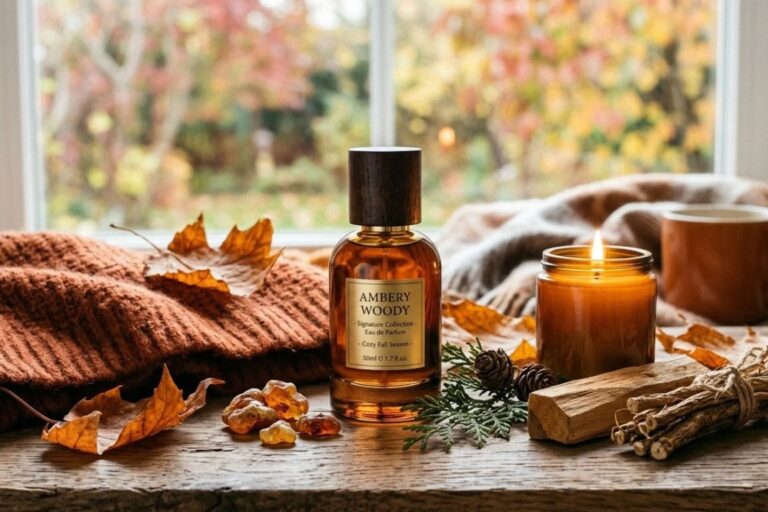
An ambery woody fragrance pairs warm, resinous amber with grounded wood notes such as cedar, sandalwood, or vetiver, creating a scent that feels rich and comforting rather than sharp or fleeting. This combination holds up well once the air turns cooler, clings closer to the skin than lighter florals or citrus blends, and manages to read as warm and clean at the same time. For fall specifically, a woody ambery perfume brings the kind of depth that matches sweaters, dim light, and shorter days without turning heavy or overpowering.
That balance of warmth and structure is exactly why amber and wood pairings show up so often once temperatures drop, and why so many perfume houses save their richer, more resinous compositions for autumn and winter release calendars.
What Makes This Amber and Wood Combination Feel Like Fall
Two ingredient families do most of the work here, and understanding what each one contributes makes shopping for a new bottle much less confusing.
The Amber Side of the Blend
Amber, in perfume terms, is not the fossilized resin people picture when they think of jewelry. It’s a scent accord built from ingredients like labdanum, benzoin, and vanilla, sometimes softened with a touch of musk. The result is sweet without being sugary, warm without being spicy on its own, and long-lasting on skin. Amber is what gives a fall scent its glow – the part that makes a perfume feel like it’s radiating heat rather than sitting flat.
The Wood Side of the Blend
Wood notes bring structure. Cedar adds a dry, pencil-shaving sharpness; sandalwood softens things with a creamy, almost milky quality; vetiver contributes an earthy, slightly smoky edge. Without wood, amber alone can feel a bit one-note and overly sweet. Without amber, wood alone can feel cold and austere. Combined, they balance each other out, which is exactly why this pairing has stayed a fixture of cooler-weather perfumery for decades.
| Note Family | Character | Common Ingredients | Feels Best In |
| Amber | Warm, sweet, resinous | Labdanum, benzoin, vanilla | Evening, cold weather |
| Wood | Dry, grounded, earthy | Cedar, sandalwood, vetiver | Daytime or layered wear |
| Combined | Rounded, long-lasting | Amber + wood accord | Fall through winter |
This pairing has earned its own spot in fragrance classification, too. Fragrances of the World, the reference system used across the perfume industry to categorize scents, now lists Woody Amber as a dedicated family for 2025 and 2026 releases rather than folding it into a broader “oriental” group, a sign of how established the combination has become.
Why These Scents Suit Cooler Months So Well
Skin chemistry shifts with temperature, and warmer, denser molecules like amber and wood tend to project better in cool, dry air than they do in summer heat. Lighter citrus and green notes, by contrast, can feel thin or disappear entirely once the weather turns. That’s not a coincidence – perfumers formulate with climate in mind, which is part of why this kind of scent so often gets labeled a “fall scent” rather than a summer one.
Retail data backs this up too. The Fragrance Shop’s 2025 trend report lists amber’s staying power among the defining directions for the season and notes that shoppers now do more homework before buying, weighing quality and longevity more heavily than before — a habit that favors amber and wood accords, since both tend to outlast lighter, more fleeting scent families on skin.
Signs You’ve Found the Right Amber and Wood Match
Not every amber-and-wood blend suits every wearer, and a bottle that smells great on a tester strip won’t always behave the same way on skin. A few signs tend to point to a good match:
- It smells different an hour later, in a good way. A well-built fragrance changes as it dries down, moving from brighter opening notes into a warmer, woodier base.
- It doesn’t fight your natural scent. Some wood notes clash with certain skin types; a good match feels like it belongs, not like it’s sitting on top of you.
- It lasts without needing constant reapplication. Amber-heavy formulas are known for longevity, often six hours or more depending on concentration.
- People notice it without being overwhelmed by it. Sillage should be noticeable at a normal conversational distance, not from across a room.
- It still feels appealing after repeated wears. Some scents are exciting once and tiring by the third wear — a genuinely good match holds up.
For a low-risk way to sample this style before buying a full bottle, browse the ambery woody fragrance options within a curated line that groups warm, resinous scents together for easier side-by-side comparison.
Notes That Pair Beautifully With Woody Ambery Perfume
This kind of scent rarely stands entirely alone in a composition. It usually shares space with a few supporting notes that push the scent in a slightly different direction:
- Spices like cardamom, black pepper, or clove, which add brightness and a bit of edge to the warmth.
- Vanilla or tonka bean, which deepen the sweetness without making the fragrance smell like dessert.
- Leather, which adds a smoky, slightly rugged texture that pairs naturally with wood.
- Citrus, used sparingly in the opening, to keep an otherwise heavy blend from feeling flat at first spray.
- Incense or smoky resins, which push the fragrance toward something moodier and more atmospheric.
Tips For Wearing Ambery Woody Perfume This Season
A rich, warm fragrance rewards a slightly different approach than a lighter, everyday scent:
- Apply to pulse points, not clothing. Wrists, neck, and behind the ears warm the scent gradually and let the dry-down unfold properly.
- Go easy on quantity. Amber and wood project further than citrus or aquatic notes, so two or three sprays are usually plenty.
- Let it settle before judging it. These blends often smell quite different ten minutes in than they do on first application – give a new bottle time before deciding it isn’t right.
- Pair with matching textures. Wool, leather, and suede tend to complement this scent family rather than compete with it.
- Store it properly. Heat and direct light break down resinous notes faster than lighter formulas, so a cool, dark drawer keeps the fragrance performing as intended.
Finding Your Match in a Signature Collection
Choosing the right amber and wood scent often comes down to how much sweetness or smoke someone wants in the base, and how strongly they want the wood notes to show through. A curated line, such as the Signature Collection, makes that comparison easier by grouping several amber and wood-forward options side by side rather than scattering them across unrelated categories.
Frequently Asked Questions
What does this amber and wood combination actually smell like?
Expect warmth first – a sweet, resinous quality similar to vanilla or dried fruit – followed by a drier, more grounded wood note underneath. The overall impression is cozy and rich rather than fresh or sharp, closer to what someone might describe as a “sweater weather” scent.
Is this kind of perfume only appropriate for cold weather?
No, though it does perform best in cooler, drier air. Many people wear lighter concentrations of amber and wood blends year-round, reserving the richest, most concentrated versions for fall and winter.
Can both men and women wear this fragrance style?
Yes. This note combination is one of the more gender-neutral families in modern perfumery, since amber and wood don’t carry the strongly “masculine” or “feminine” associations that some floral or musk notes do.
What’s the difference between amber and woody amber fragrance families?
Amber on its own leans sweeter and more resinous, built mainly from labdanum, benzoin, and vanilla. Woody amber adds a stronger backbone of cedar, sandalwood, or patchouli, giving the same warmth a drier, more structured finish.
How long does woody ambery perfume typically last on skin?
Longevity varies by concentration, but amber and wood notes are generally known for staying power, often lasting six to eight hours or more in an eau de parfum strength, since resinous and woody molecules evaporate more slowly than citrus or green notes.
