

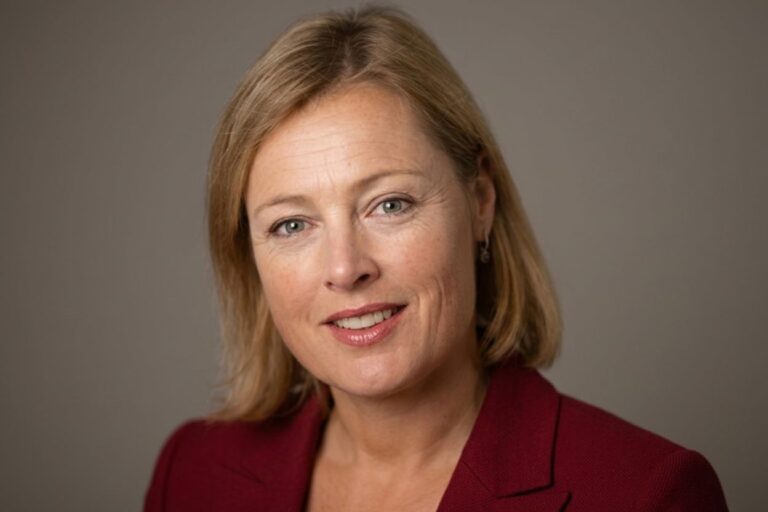
Dr Gillian Tett stands out as a unique force in global journalism. Most financial writers look only at charts, numbers, and balance sheets. However, this brilliant thinker analyses the economic world through the lens of human behaviour. She combines traditional economic reporting with social science to uncover hidden financial risks.
Her fascinating journey began far from the trading floors of Wall Street or London. Today, she represents one of the most respected voices in modern economic history. Her predictive insights have saved corporate leaders and everyday citizens from massive financial disasters. Consequently, her unique perspective continues to shape global monetary discussions.
| Professional Aspect | Key Achievement & Detail |
| Current Age (2026) | 58 Years Old (Born July 10, 1967) |
| Academic Credentials | PhD in Social Anthropology from Cambridge University |
| Famous Prediction | Anticipated the 2008 Global Financial Crisis |
| Latest 2026 Project | Co-hosting The Story of Money Video Podcast |
| Current Leadership Role | Provost of King’s College, Cambridge |
| Major Royal Honor | Awarded an OBE in 2024 for Economic Journalism |
The Early Life and Academic Roots of Dr Gillian Tett
Cultivating an Anthropological Mindset
Gillian Romaine Tett was born on July 10, 1967, in the United Kingdom. Therefore, the current gillian tett age is 58 years old as of 2026. From her early youth, she demonstrated an intense curiosity about how human societies operate. She attended the prestigious North London Collegiate School, where her academic talents flourished.
Later, she pursued higher education at the University of Cambridge. Gillian Tett joined Clare College as an undergraduate student to study Archaeology and Anthropology. She graduated in 1989, but her academic journey did not stop there. She chose to deepen her knowledge by pursuing a doctoral degree.
Fieldwork in Soviet Tajikistan
To earn her doctorate, she conducted extensive, immersive research in Central Asia. Specifically, she lived in a small Muslim village within Soviet Tajikistan during the early 1990s. This experience was both challenging and transformative. She observed how marriage systems and cultural identities shifted during the collapse of communism.
In 1996, the University of Cambridge officially awarded her a Doctor of Philosophy. Her thesis offered profound insights into alternative social structures. However, she grew frustrated with academic anthropology, viewing it as overly self-critical. As a result, Dr Gillian Tett decided to apply her qualitative analytical skills to global journalism.
How Anthro-Vision Predicted the 2008 Financial Crisis
Viewing Wall Street as a Tribe
In 1993, she joined the Financial Times, a move that completely changed her life. She worked across various desks, including positions in Brussels and Tokyo. Eventually, she became the capital markets editor for the publication. This role placed her at the centre of global credit markets during the mid-2000s.
While other reporters focused solely on mathematical models, she used her anthropological training. She viewed the bankers of Wall Street and the City of London as an insular tribe. These professionals practised rituals that outsiders could not understand. Furthermore, they spoke in a complex dialect filled with confusing financial jargon.
Warning the World of Credit Meltdown
Through this unique cultural lens, she recognised serious risks in the banking system. She observed that bankers were creating complex instruments like collateralised debt obligations. These instruments were hidden away in a shadow banking sector. She realised that the financial tribe had developed a massive collective blind spot.
Therefore, she began writing articles warning about an impending credit collapse. Many mainstream economists dismissed her concerns at the time, calling her an outsider. However, her predictions proved terrifyingly accurate when the global financial crisis erupted in 2008. Her brilliant coverage of this disaster earned her widespread international acclaim.
The Personal Life of Gillian Tett
Relationships and the Gillian Tett Husband Query
Many readers who follow financial journalism often search online for details about Gillian Tett husband. To clarify her current relationship status, she is currently unmarried. She values her privacy deeply and keeps her personal affairs away from the media spotlight.
In the past, she maintained a long-term relationship, but she prefers to focus public attention on her professional work. She manages her public life with great dignity, ensuring that her family remains protected from media intrusion. This balance allows her to excel in demanding leadership roles without sacrificing her family’s peace.
Raising the Gillian Tett Daughters
In addition to her relationship status, public interest often centres on Gillian Tett daughters, who form her immediate family. She is a proud, dedicated single mother to two daughters. Balancing a high-powered journalism career with motherhood has always required immense dedication and resilience.
She has raised her children while managing demanding global roles, such as serving as the US Managing Editor for the Financial Times in New York. Her daughters have grown up witnessing a powerful female leader navigate male-dominated spaces. Consequently, she serves as an incredible role model for her children and young women globally.
Assessing the Gillian Tett Net Worth and Financial Success
Media Salaries and Book Royalty Streams
As a top-tier global intellectual, she has a financial standing that reflects decades of high-level professional success. Naturally, the public frequently inquires about Gillian Tett net worth in 2026. While exact figures for her private assets remain confidential, corporate experts estimate her net worth at around $4 million to $5 million.
This impressive wealth stems from multiple lucrative income streams. First, she earned a substantial salary during her decades-long tenure at the Financial Times. Second, her bestselling books generate significant, ongoing royalty payments. Her written work continues to be required reading in business schools worldwide.
Speaking Engagements and Academic Leadership
In addition to publishing, she commands substantial fees as a keynote speaker at major global economic forums. International banks, corporations, and universities frequently invite her to share her unique insights. Her ability to explain complex market shifts makes her highly sought after by corporate boards.
Furthermore, her current position at the University of Cambridge provides a steady academic stipend. This combination of journalism, literature, speaking tours, and academic leadership guarantees her financial independence. She uses her financial success to support various educational charities and social causes.
Major Books and Intellectual Contributions
Fool’s Gold and The Silo Effect
Her literary contributions have fundamentally shifted how corporate leaders view organisational design. In 2009, she published her groundbreaking book, Fool’s Gold. This book details the structural greed and cultural blindness that caused the 2008 economic collapse. The book won the prestigious Financial Book of the Year award.
Later, in 2015, she released The Silo Effect, which analysed failures in institutional communication. She explained how modern companies organise themselves into isolated departments, or silos. These cultural barriers prevent vital information from flowing freely across an organisation. As a result, major institutions suffer from massive, preventable blind spots.
Anthro-Vision: A New Methodology
In 2021, she codified her life’s work in her masterpiece, Anthro-Vision: A New Way to See in Business and Life. This book provides practical tools for applying anthropology to modern business challenges. She argues that relying solely on big data can completely mislead corporate executives.
Instead, she suggests combining data with qualitative human experience. This methodology helps businesses understand consumer behaviour, navigate corporate diversity, and manage artificial intelligence. The book remains a vital guide for managers trying to survive in a volatile global economy.
Current 2026 Breakthroughs: The Story of Money Podcast
Launching a New Multi-Media Venture
Staying at the absolute forefront of modern financial media, she has launched an exciting new venture in 2026. Alongside her co-host, FT Alphaville editor Robin Wigglesworth, she officially debuted a blockbuster video podcast series titled The Story of Money. This highly anticipated show explores the long history of global finance to help modern investors anticipate upcoming market disruptions.
The podcast expertly links historical financial events with cutting-edge 2026 market dynamics. For instance, the show brilliantly compares 19th-century unregulated American banking frontier experiments to modern cryptocurrency trends. By studying past market patterns, she provides listeners with a timeless playbook for identifying upcoming opportunities and avoiding catastrophic corporate collapses.
Analysing the AI Boom Through History
Furthermore, her recent 2026 podcast episodes offer crucial commentary on the current artificial intelligence boom. She masterfully contrasts the current Wall Street frenzy over AI with the mid-19th-century American railway bubble, which ultimately caused the devastating Panic of 1873. Through these historical parallels, she provides crucial warnings for tech investors today.
Her voice remains vital as corporations rapidly deploy machine learning tools. She consistently emphasises that while technology shifts, human greed and tribal behaviour remain entirely identical. Therefore, her latest media work bridges the ancient past with tomorrow’s automated future.
Latest Insights on AI Literacy and Workplace Shocks
The Warning Against Purely Technical Graduates
In her recent high-profile Financial Times columns, she has dropped bombshell insights regarding the evolving workforce. She revealed that top New York financiers are actively shifting away from hiring pure STEM graduates who claim to be “AI natives.” These corporate leaders find that tech-focused students often exhibit alarmingly shallow critical-thinking skills.
Instead, she reports a fascinating trend where top financial firms now prefer to hire humanities students. These students understand human culture, literature, and ethical reasoning. She notes that over-reliance on automated tools has actually stalled corporate productivity growth across the West.
Assessing Global Imbalances and Shocks
Additionally, her 2026 economic commentary highlights severe structural risks building up within America’s global investment position. She warns that the international financial system currently suffers from massive, ignored imbalances. She urges investors to closely monitor the expansion of private credit and geoeconomic shifts.
However, she also notes that the broader banking infrastructure remains far better capitalised than it was in 2008. While geopolitical tensions cause ongoing market jitters, her anthropological perspective helps leaders separate superficial noise from deep structural silence. She continues to challenge standard economic dogmas every week.
Leading King’s College, Cambridge into the Future
Becoming Provost in 2023
In October 2023, her career came full circle when she assumed office as the Provost of King’s College, Cambridge. This historic appointment marked a significant milestone for the prestigious institution. She became one of the few women to lead the historic college since its founding in 1441.
In this role, she oversees academic excellence, financial management, and student welfare. She brings her vast global experience into the traditional university environment. Consequently, she works hard to bridge the gap between academic research and real-world economic policy.
Advocating for Sustainable Finance
While leading the college, she continues her work with the Financial Times. She previously co-founded FT Moral Money, a pioneering newsletter focused on sustainable business. This publication tracks the global shift toward Environmental, Social, and Governance (ESG) standards.
She believes that modern capitalism must evolve to address climate change and social inequality. Therefore, she uses her platform to push corporate boards toward ethical decision-making. Her dual role as an academic leader and a journalist allows her to influence both future students and current CEOs.
Awards, Honours, and Global Recognition
Receiving the OBE in 2024
Her incredible contributions to public discourse have earned her numerous prestigious honours. In the 2024 New Year Honours, King Charles III awarded her an OBE (Officer of the Order of the British Empire). This honour recognised her exceptional services to economic journalism and global financial literacy.
This royal recognition solidified her status as one of Britain’s most impactful intellectuals. She has also received top honours from media organisations across the globe. For example, she won the British Press Awards for Journalist of the Year and Columnist of the Year.
Academic Medals and Distinctions
Beyond journalism circles, scientific organisations have also recognised her unique interdisciplinary approach. The British Academy awarded her its President’s Medal for explaining complex economic theories clearly. Additionally, the American Anthropological Association presented her with a special distinction.
These diverse awards prove that her work transcends traditional professional boundaries. She remains a rare example of an intellectual who thrives in both the corporate boardroom and the academic lecture hall. Her insights continue to guide policymakers as they navigate new financial challenges.
Conclusion: The Enduring Legacy of Dr Gillian Tett
Ultimately, her life story demonstrates the power of keeping an open mind. By combining anthropology with economics, she completely redefined modern financial journalism. She showed the world that financial systems are ultimately human systems run by social tribes.
Today, she continues to inspire millions through her weekly columns, academic leadership, and best-selling books. Whether she is advising global leaders or teaching students at Cambridge, her core message remains clear. To understand global markets, we must first learn to understand each other.
