

Table of Contents
- Introduction
- Understand Where Plastic Appears in Daily Life
- Start With the Easiest Swaps
- Replace Disposable Shopping Bags
- Choose Refillable and Reusable Products
- Build Low-Plastic Habits That Last
- Conclusion
Introduction
Living with less plastic can feel overwhelming at the beginning. Plastic appears in grocery packaging, takeout containers, cleaning products, bathroom bottles, shopping bags, snack wrappers, and many everyday items. It is easy to feel that reducing plastic requires a complete lifestyle change.
In reality, the best approach is gradual. A low-plastic lifestyle does not need to be perfect to be meaningful. Beginners can start by replacing the easiest single-use items first and building habits that fit naturally into daily routines.
Understand Where Plastic Appears in Daily Life
Before making changes, notice where plastic enters your home most often. Many households produce plastic waste from the same categories every week.
Common sources include:
- Grocery bags
- Produce bags
- Bottled drinks
- Food wrappers
- Takeout containers
- Disposable cutlery
- Bathroom product bottles
- Cleaning product packaging
- Online shopping packaging
Once you understand your main sources of plastic waste, you can choose changes that have the most practical impact.
Start With the Easiest Swaps
Beginners should start with swaps that are simple, affordable, and easy to repeat. If a change feels inconvenient, it is less likely to become a habit.
Easy first swaps include:
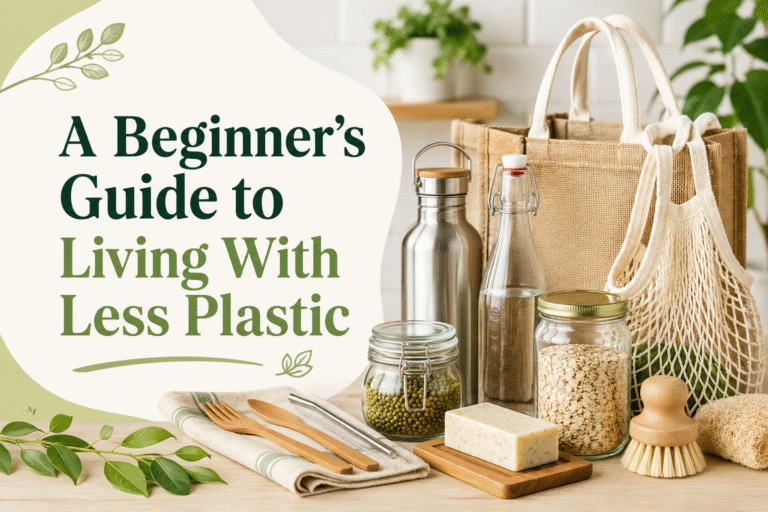
- Carry a refillable water bottle
- Use cloth towels instead of paper towels
- Choose bar soap instead of bottled soap
- Store leftovers in reusable containers
- Bring your own cup for coffee
- Keep reusable bags ready for shopping
Small changes build confidence. After one habit feels normal, add another.
Replace Disposable Shopping Bags
Disposable shopping bags are one of the easiest plastic items to reduce. They are often used for a short time and then thrown away. Keeping reusable shopping bags in convenient places makes it easier to avoid them.
Good places to store reusable bags include:
- Near the front door
- In the car
- Inside a backpack
- At work
- Near your grocery list
- In a stroller or bike basket
Reusable bags are practical alternatives to plastic bags because they work for more than just groceries. They can carry books, clothes, pharmacy items, farmers’ market produce, and everyday purchases.
Choose Refillable and Reusable Products
Refillable products help reduce repeated packaging waste. Start with items you use often so the habit feels worthwhile.
Practical options include:
- Refillable soap dispensers
- Reusable water bottles
- Refillable cleaning sprays
- Reusable lunch containers
- Cloth produce bags
- Reusable coffee cups
- Metal or bamboo cutlery
You do not need to replace everything at once. Use up what you already own, then choose a better option when it is time to restock.
Build Low-Plastic Habits That Last
A habit lasts when it is convenient. If reusable items are hidden in a closet, they are easy to forget. Keep them visible and ready.
Helpful tips include:
- Put bags back after unpacking groceries
- Wash reusable bottles immediately
- Keep a spare bag in your work bag
- Create a small reuse station at home
- Keep containers near lunch supplies
- Avoid buying new items before using what you have
The goal is progress, not perfection. Forgetting a reusable item once does not mean the habit has failed.
Conclusion
Living with less plastic begins with awareness and simple swaps. By identifying where plastic appears, replacing disposable shopping bags, choosing refillable products, and building convenient habits, beginners can reduce waste without making daily life difficult.
