

Most homeowners don’t give much thought to how their house is built until they try to insure it. Then they discover that the words “non-standard construction” can make getting cover more complicated than expected.
If you’ve ever been turned down by a mainstream insurer or received a quote that seemed unreasonably high, your property’s construction type could well be the reason. Find out why it matters and what you can do about it below.
What Insurers Actually Mean by “Non-Standard”
Standard construction, in insurance terms, means a home built with brick or stone walls and a pitched slate or tile roof. That combination is what most high-street insurers price their policies around.
Anything outside that definition gets labelled non-standard. This covers a wide range of properties, and some of them are far more common than people realise.
Common Types of Non-Standard Construction
Here are some of the property types that regularly fall outside the standard category:
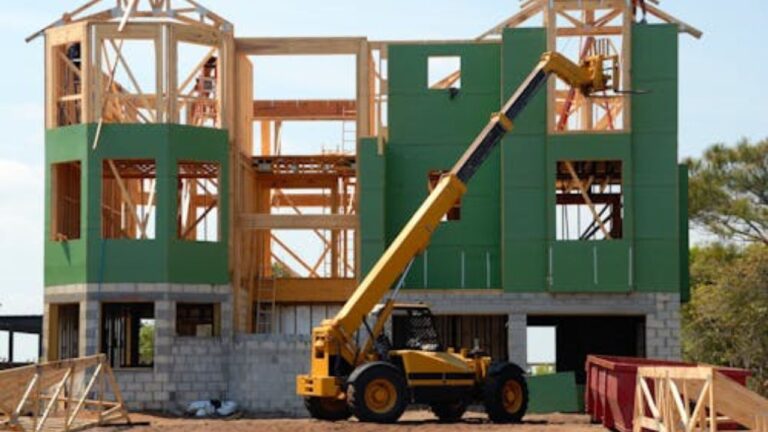
- Timber-framed homes – the frame is wood rather than brick or block. These are actually very common in newer builds, but some insurers treat them as higher risk due to fire and moisture concerns.
- Concrete panel construction – a method widely used in the post-war decades, particularly for council housing. Properties like Airey and Wimpey No-Fines homes fall into this category.
- Wattle and daub homes – a building method using woven wood strips packed with a mud-based mixture. These properties are most often found in listed or period buildings, and their age and unusual materials can make repair costs and rebuild estimates harder for insurers to assess.
- Steel-framed homes – similar concerns to timber frame, with additional questions around corrosion over time.
- Flat or large flat roofs – these don’t affect the walls, but a significant flat roof section will flag a property as non-standard for most insurers.
Specialists like Intelligent Insurance deal with these types of properties on a daily basis, which puts them in a better position to price the risk accurately and offer cover where standard insurers won’t.
Why Non-Standard Construction Affects Your Cover
The issue comes down to how insurers calculate risk. A brick-built home with a tiled roof has decades of claims data behind it. Insurers know roughly what it costs to repair or rebuild, and they understand how it behaves in fires, floods, and storms.
With non-standard properties, that certainty is not there. Timber frame homes, for instance, can spread fire more quickly than masonry. Concrete panel homes may have issues with structural integrity, particularly if they haven’t been repaired or certified under one of the relevant schemes.
This doesn’t mean these homes are uninsurable. It means the insurer needs more information to offer appropriate cover.
How It Affects the Cost of Insurance
Premiums for non-standard properties are usually higher than for equivalent standard-construction homes. There are a few reasons for this:
- The rebuild cost tends to be higher. Specialist materials or methods may be needed, and that’s reflected in the sum insured.
- There’s a smaller pool of insurers willing to offer cover, which reduces competition and can push prices up.
- Some non-standard property types carry a genuinely elevated risk profile for specific perils, such as fire or subsidence.
That said, the gap between standard and non-standard premiums varies considerably. A modern timber frame home that has been well-maintained is a very different risk from a 1950s pre-fab with structural issues. An insurer who understands these distinctions will price accordingly, rather than applying a blanket loading.
What to Do If Your Home Is Non-Standard
The most important thing is to be upfront about your property type when you apply for cover. Failing to disclose the construction type can cause problems later, even if the claim itself has nothing to do with how the house is built.
It’s also worth going to a specialist insurer instead of a price comparison site. Comparison sites are built around standard risks, and non-standard properties often don’t fit neatly into their question sets. A specialist will ask the right questions and have access to underwriters who actually understand the property.
If you’re buying a non-standard property, get an independent survey and check whether any structural issues have been certified or repaired. For concrete panel homes in particular, some lenders and insurers will want to see evidence of work carried out under an approved scheme before they’ll proceed.
All in All
Non-standard construction covers a wide range of homes, from popular modern timber frames to properties with a flat roof. What they have in common is that standard insurers tend to struggle with them. Getting the right cover means going to someone who handles these properties regularly and understands what’s actually being insured.
