

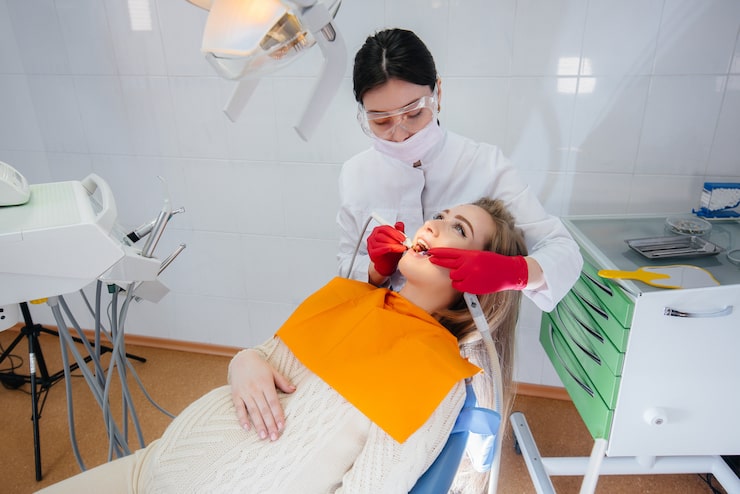
By 27 December, the pattern is familiar enough that some practices could set their diary by it. Not a general rise in bookings, but three specific injuries, showing up in roughly the same order, every year.
Call One: The Cracked Molar
It’s usually a Christmas cracker nut, or a nut bowl left out over several days. Someone bites down on what they think is a whole almond and hits a piece of shell that never got separated properly, or a Brazil nut that’s harder than the jaw expected mid-chew. The crack is often a straight vertical split down a back molar, because that’s where the biting force concentrates hardest.
Ice does the same thing from a different angle. A finished G&T, an ice cube left in the glass, bitten out of habit rather than left to melt, the temperature shock combined with the hardness is enough to fracture a tooth that’s been perfectly fine handling everything else all year.
A dentist leamington spa, patients call about this on Boxing Day almost always describe the same sensation: a sharp, sudden pain on one side, followed by sensitivity to cold that wasn’t there an hour earlier.
Call Two: The Filling That Gave Up
This one tends to land a day or two later, once the toffee and Christmas cake have had a proper run at people’s teeth. A filling that’s been sitting quietly for eight or ten years doesn’t need much to finally shift, a piece of nougat, a homemade toffee, dense fruitcake that sticks and pulls as it’s chewed. The filling comes away, sometimes with barely any pain because the tooth underneath has been protected for so long it’s lost some sensitivity.
People often don’t realise anything’s wrong until they run their tongue over a rough gap where a smooth filling used to be.
Call Three: The Grazing Problem, Arriving a Few Weeks Later
This one doesn’t show up as a Boxing Day emergency. It shows up in mid-to-late January, at the first check-up booked after the holidays, as a small cavity that wasn’t there in November.
The cause isn’t the volume of sugar eaten over Christmas; most people already brace for that and don’t overthink one indulgent meal. It’s the pattern of eating it. A box of chocolates left open on a side table gets picked at across an entire afternoon rather than finished in one sitting. Each new piece restarts the process that lets bacteria on the teeth produce acid, so a mouth that’s grazed on sweet things from 10 am to 9 pm has spent most of the day in a mildly acidic state, considerably more than the same amount of sugar eaten in one go at lunch would cause.
Why the Timing Makes All Three Worse
None of these three things are unique to the holidays. Nuts, ice, sticky food, and chocolate exist year-round. What changes the outcome is when they happen. A cracked tooth on 27 December, during the closure window that a lot of practices observe between Christmas and New Year, often waits longer to be seen than the same injury would on an ordinary Tuesday in March. A crack left several extra days without attention has more chance of extending toward the nerve, turning what could have been a straightforward repair into root canal treatment.
What Changes the Outcome
Cracking nuts by hand rather than biting into the shell removes the single most common cause of the first phone call. Letting ice melt in the glass rather than crunching it removes the second most common cause of the same call. Keeping chocolates or sweets to a set point in the day, after a meal, say, rather than left out to graze on for hours, cuts down the constant acid exposure that shows up as decay weeks later, without meaning anyone has to eat less of it overall.
What a Practice Open Over the Holidays Actually Solves
Andrew Lee Dental Practice keeps weekend and evening appointments running through the year specifically because a cracked tooth doesn’t wait for convenient scheduling. That matters more in this particular week than almost any other point in the calendar, because it’s the one stretch where an emergency is genuinely predictable in advance, which makes knowing where to call before it happens far more useful than working it out while holding a broken filling on the 27th.
If you’re the one who just bit down on something you shouldn’t have, the fix isn’t complicated: don’t wait to see if it settles on its own, and call Andrew Lee Dental Practice, a dentist in Kenilworth covering Warwick.
