

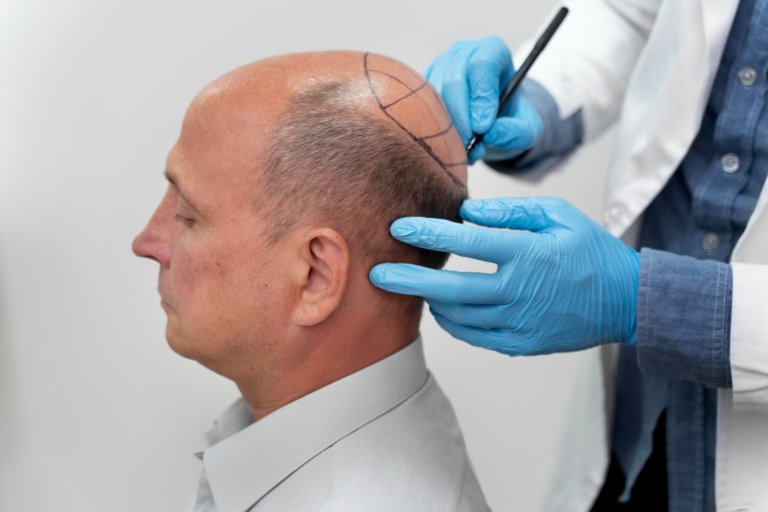
Hair transplant recovery follows a fairly predictable pattern. The first week brings swelling and small scabs, most of the transplanted hairs shed between weeks two and six, new growth usually appears around months three to four, and the result keeps thickening until roughly 12 months, with the crown often taking up to 18 months to mature fully.
The hardest part for most patients isn’t the physical recovery, which is usually quick, but the waiting. For several months, the transplanted area can look no better than before surgery, and sometimes worse. Knowing what’s normal at each stage makes it much easier to stay patient and to spot the rare signs that something needs attention.
The First Week: Swelling, Scabs and Careful Washing
The first few days are the most hands-on part of recovery. The recipient area is usually pink and dotted with tiny crusts around each graft, and the donor area at the back of the head feels tender. Swelling commonly appears around the forehead on day two or three and can drift towards the eyes before settling, which looks alarming but is normal and fades within a few days. Sleeping with the head slightly raised for the first nights helps reduce it.
Clinics give specific washing instructions, typically starting a day or two after surgery with a gentle pouring or soaking method rather than rubbing. Following these closely matters, because the grafts are at their most vulnerable in the first week. Scratching, knocking the head or wearing a tight hat can dislodge them.
By around days seven to ten, the small scabs usually soften and fall away with washing. Many patients return to desk work within three to five days, especially if they can work from home, although visible redness may still be there. Light walking is fine, but gym sessions, heavy lifting and anything that causes heavy sweating are usually postponed for at least a couple of weeks.
Weeks Two to Four: Healing Settles and Shedding Begins
Once the scabs are gone, the scalp starts to look much calmer. Redness in the recipient area fades gradually, faster in some skin types than others, and the donor area heals to the point where short hair covers it well. Itching is common as the skin heals, and a clinic-recommended spray or gentle washing usually helps.
This is also when shedding tends to begin. Between roughly two and six weeks after surgery, many of the transplanted hairs fall out. It can feel like the procedure has failed, but it’s a normal part of the cycle. The follicles stay safely in place under the skin and enter a resting phase before growing new hair. Some patients also notice temporary shedding of existing hair around the transplanted zone, often called shock loss, which usually grows back over the following months.
Numbness or a tight feeling in the donor or recipient area is also common and generally improves over several weeks to a few months as small nerves recover. Most clinics clear patients for normal exercise after two to four weeks, while swimming, saunas and contact sports often wait until around the four-week mark.
Months Two to Four: The Quiet Phase and First New Growth
Months two and three are often called the “ugly duckling” phase. The transplanted hairs have shed, new ones haven’t appeared yet, and the area can look similar to how it did before surgery. This is when patience matters most, and many people find it helpful to take photos in the same light each month, as changes are easier to see side by side than in the mirror.
Around months three to four, new hairs start to appear. At first they’re fine, thin and sometimes slightly wavy or wiry, and they may grow unevenly across the treated area. A few small spots resembling pimples can appear as hairs push through the skin. These usually settle on their own, but any that become painful, swollen or keep recurring are worth mentioning to your clinic.
Many patients book a progress review at this point, and specialists who monitor post-operative growth can confirm that the new hairs are coming through as expected while discussing treatments that may help protect the native hair around the transplanted area. Transplanted hair is generally resistant to further loss, but the surrounding hair can keep thinning, so a plan for the long term matters.
Months Five to Nine: Visible Change and Thickening
From around month five, most patients start to see a real difference. The new hairs grow longer and thicker, and coverage becomes visible in everyday situations rather than only in close-up photos. By six months, many people estimate that around half of the final result is in place, although this varies widely from person to person.
During months seven to nine, the texture of the new hair usually becomes more natural. Early wiry or frizzy hairs often soften and blend with the surrounding hair, and density improves as more follicles move into their growth phase. This is often when patients first feel confident styling their hair differently or going without a hat.
Haircuts can generally continue as normal by this point. Most clinics suggest avoiding very short clipper cuts directly over the transplanted area for the first few months, but by this stage, the grafts are well established.
Months Ten to Eighteen: The Final Result and Long-Term Care
Most patients see the majority of their result by around 12 months. The hairline and front of the scalp usually mature first, while the crown can continue to improve for up to 18 months, as hair in that area often grows more slowly. Final density depends on the number of grafts, the size of the treated area and individual hair characteristics such as thickness and curl.
It’s worth knowing the warning signs that call for contact with your clinic at any stage: spreading redness, pus, increasing pain, fever or swelling that gets worse instead of better. These are uncommon, but prompt attention prevents minor problems from affecting the result. Very patchy growth after a year is also worth discussing, as it may point to issues that can be assessed.
Once your result has matured, the focus shifts to keeping it. Protecting the scalp from strong sun, maintaining a healthy lifestyle and following any advice on treatments for your remaining native hair all help the transplant continue to look natural as you age. Plan your expectations around the full 12 to 18 months rather than the first few weeks, and treat each monthly photo as a small checkpoint on the way. By the time the result is complete, the quiet months in between will feel like a small price for hair that grows naturally for years to come.
