

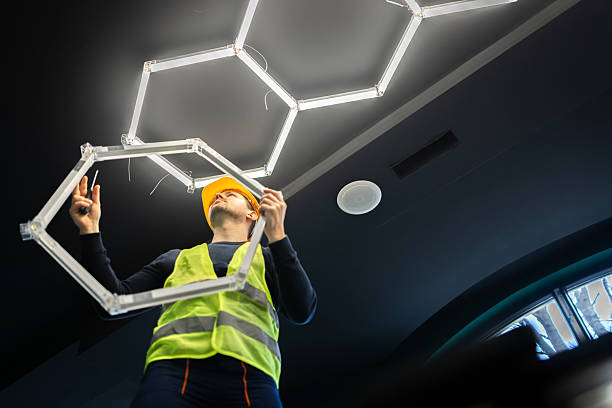
For Environmental, Health, and Safety (EHS) managers and plant operators, mitigating risk is a continuous mandate. While machinery maintenance and safety training are standard protocols, the foundational role of facility infrastructure is frequently overlooked.
Industrial lighting is not merely a utility; it is a critical safety system. Upgrading to advanced optical technology directly reduces accident rates, ensures regulatory compliance, and protects the physical well-being of the workforce.
Why Purpose-Built Industrial LED Lighting is Essential
When mitigating physical risks in heavy manufacturing or warehouse zones, standard commercial fixtures simply fall short. General-purpose lighting lacks the robust optical control required to navigate complex industrial topologies safely.
Procuring fixtures directly from a dedicated industrial LED lighting manufacturer ensures that optical lenses and beam angles are engineered specifically to eliminate dangerous shadows and reduce glare.
Specialized manufacturers like Wosen develop robust lighting systems tailored for harsh environments, providing the precise photometric performance required to keep floor workers safe. These purpose-built fixtures withstand vibrations, thermal stress, and airborne particulates that degrade standard lights.
The Direct Correlation Between Poor Visibility and Hazards
Inadequate illumination creates an environment ripe for occupational hazards. Dim lighting directly increases the physical reaction time of forklift operators and heavy machinery handlers, leading to severe industrial collisions.
Furthermore, legacy lighting systems often produce dangerous stroboscopic effects. This rapid flickering can make rotating machinery or moving parts appear stationary, a catastrophic optical illusion for machine operators.
Uneven lighting also casts harsh shadows across factory floors and warehouse aisles. These unlit areas obscure physical obstacles, significantly increasing the likelihood of trip, slip, and fall incidents among floor personnel.
Key Photometric Metrics for Accident Prevention
To effectively eliminate visual hazards, EHS professionals must evaluate lighting systems through strict optical parameters rather than simple wattage.
Glare Reduction and UGR (Unified Glare Rating)
Excessive glare acts as a visual pollutant, causing temporary blindness or severe visual discomfort for workers operating heavy equipment.
- Definition:UGR (Unified Glare Rating) measures the psychological glare of a lighting installation in a specific space.
- Safety Implication: High glare can completely blind a forklift driver navigating high-rack aisles.
- Target Metric: Industrial safety standards strongly recommend a UGR of < 19 for tasks requiring focused visual attention.
Color Rendering Index (CRI) and Hazard Identification
Accurate color perception is a life-saving necessity in chemical plants, manufacturing lines, and electrical maintenance zones.
- Definition:Color Rendering Index (CRI) measures a light source’s ability to reveal the true colors of objects compared to natural light.
- Safety Implication: Workers must accurately identify color-coded wiring, chemical warning labels, and safety demarcations (like red hazard zones or yellow caution tape).
- Target Metric: A CRI of 80 or higher is strictly required to prevent fatal misidentifications in industrial environments.
Illuminance Uniformity
The transition between brightly lit areas and deep shadows causes severe pupil dilation and constriction, leading to acute visual fatigue.
- Definition:Illuminance Uniformity is the ratio of minimum illuminance to average illuminance in a given workspace.
- Safety Implication: Eliminating “black triangles” (dark zones) ensures operators maintain spatial awareness when moving between different facility zones.
- Target Metric: High uniformity ensures consistent visibility, keeping the contrast ratio well within safe physiological limits.
Compliance with Occupational Safety Standards
Maintaining optimal illumination isn’t just about operational efficiency; it is a strict regulatory requirement that actively protects human lives on the facility floor.
According to the guidelines provided by the Occupational Safety and Health Administration, proper lighting in industrial environments is foundational to accident prevention.
These federal mandates dictate minimum foot-candle and lux illumination levels for various work zones, ensuring that employees can safely navigate spaces and operate heavy machinery without visual impairment. Failure to meet these metrics exposes facilities to substantial legal liabilities and fines.
Conclusion: Prioritizing EHS through Infrastructure
Investing in industrial-grade LED technology is a direct investment in human safety and organizational resilience. High-performance optics eliminate the hidden hazards of glare, shadows, and color distortion.
For EHS managers and plant directors, the most pragmatic next step is initiating a comprehensive facility lighting audit. Integrating illumination metrics into the next safety inspection ensures that the facility’s infrastructure actively supports its ultimate goal: zero workplace accidents.
