

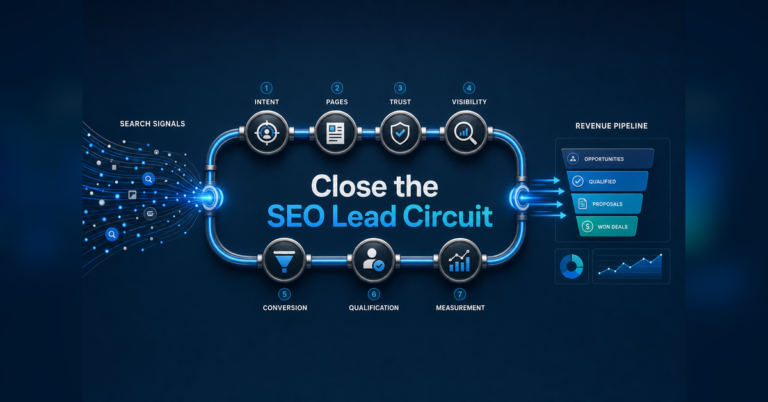
For a small business, search traffic matters only when it helps someone take a useful next step. To measure SEO leads for a small business, connect what people find in search with the calls, enquiries, bookings or sales that follow. That gives you a clearer picture than rankings alone—and helps you decide what to improve before spending more.
The process does not need an elaborate analytics setup. Start by defining what counts as a lead, make sure your website records those actions, then review the results alongside the search pages that brought people in. A few consistent measures can reveal whether SEO is attracting the right visitors.
Decide what a lead means to your business
A lead is not the same thing for every organisation. A local electrician may count a phone call or a quote request; a consultant may value a discovery-call booking; an online shop may track a purchase or a request for a larger order. Choose actions that indicate genuine interest, rather than treating every page view or newsletter sign-up as equal.
It can help to group actions by intent. A completed enquiry form or booked consultation is usually a stronger signal than downloading a general guide. You might still track both, but label them separately so a rise in low-intent activity does not disguise a fall in sales opportunities.
- Primary leads: calls, quote requests, bookings or purchases that can lead directly to revenue.
- Supporting actions: email subscriptions, downloads or visits to a contact page that show early interest.
- Qualified leads: enquiries that match your service area, budget or customer profile.
Track the action, not just the visit
Use your analytics platform and contact tools to record each important action. A form submission should trigger a clear conversion event; a booking tool should report completed bookings rather than button clicks. For phone enquiries, consider call tracking if it is appropriate for your business, and ask new customers how they found you. A simple “How did you hear about us?” field can add useful context to digital data.
Test the tracking yourself. Submit a test enquiry, check that it appears in the right report, and confirm that duplicate events are not being counted. If people can contact you through several routes, document which ones are tracked and where the records are stored. Reliable, modest tracking is more useful than a complicated dashboard full of questionable numbers.
Connect leads to the pages that attract them
Review organic search traffic and lead actions together. In a search performance report, note which queries and landing pages bring visitors; in analytics or your customer system, see which of those pages lead to enquiries. The combination helps distinguish a page that attracts broad curiosity from one that brings people ready to act.
For example, a service page may receive fewer visits than a general advice article but produce more qualified enquiries. That does not make the article a failure: it may introduce people to the business earlier. Look at assisted journeys where possible, and avoid judging every page only by last-click conversions. A practical guide to SEO marketing for small businesses can also help identify basic visibility improvements before you expand your budget.
Choose a small set of measures
Set a regular reporting period—monthly is often enough for a small business—and compare like with like. Seasonality, promotions and changes to opening hours can affect results, so add a note when something unusual happens. Useful measures include:
- Organic leads: the number of primary leads attributed to unpaid search.
- Lead rate: primary leads divided by organic landing-page visits, expressed as a percentage.
- Qualification rate: qualified leads divided by total leads.
- Lead value: revenue won, or a reasonable estimate of the value of opportunities created.
Use the figures to ask practical questions. Are visits rising while enquiries stay flat? Review the page’s offer, calls to action and mobile experience. Are leads increasing but not converting into customers? Check whether the page sets accurate expectations and whether follow-up is timely. A low lead count on a high-value service page may justify improving that page; it does not automatically mean you need more traffic.
Make the next improvement measurable
Change one meaningful thing at a time where possible, and write down what you expect it to do. You could make a contact form shorter, clarify the service area, add pricing guidance or create a more specific landing page. Record the date, then allow enough time and traffic to judge the result. Small samples can swing sharply, so treat early changes as clues rather than proof.
For businesses trying to book demos from your website, the route from first visit to booked slot should be especially clear: explain who the product suits, make the next step obvious and test the booking flow on a phone. Startups planning that journey may find this guide to prioritising web development useful when deciding what to build first. Osdire is one example of a freelance marketplace where businesses can find specialists for defined project work; a clear scope makes it easier to assess what a website change should achieve.
Ultimately, measurement is a way to make better decisions, not a scorecard to chase. Define meaningful leads, check that they are tracked correctly, and review which search pages contribute to real conversations and sales. With that foundation, even a small business can invest in SEO with more confidence and less guesswork.
