

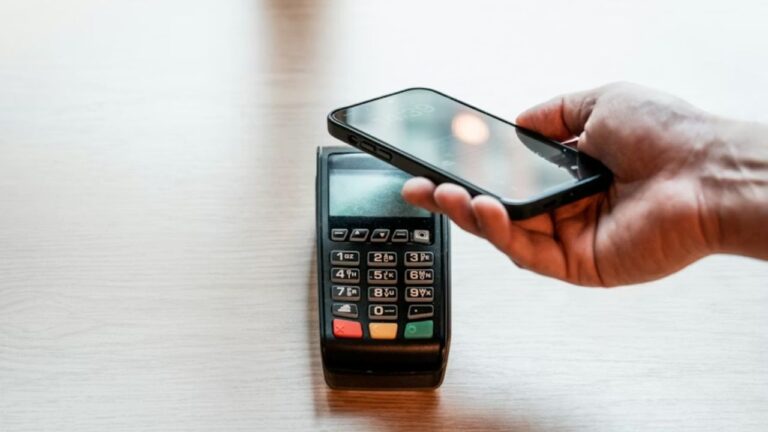
Need to evaluate digital wallet companies and everything sounds interchangeable?
Picture what happens after launch, when a user retries a transfer three times because the spinner never stops. Miss one edge case and you don’t just ship bugs, you ship disputes.
Buyers tend to focus on UI, because UI is visible. Wise teams start with money states, because money states decide whether the business can scale. Since wallets sit at the intersection of payments, identity, and fraud, vendor selection deserves more than a demo.
What “digital wallet companies” actually sell
A wallet is not only a payment button. A wallet is a product that stores credentials or value and then moves money through connected rails.
Some digital wallet companies build around card credentials, which are typically stored as tokens rather than raw card numbers. EMVCo describes payment tokenisation as replacing valuable card data with payment tokens to increase security in mobile and e-commerce transactions.
Other digital wallet companies build stored-value wallets, where balances live inside the product’s own ledger. Once balances exist, reconciliation stops being optional, because your system must prove that internal totals match external reality.
A buyer taxonomy that keeps shortlists sane
Rather than comparing brands, compare wallet types, because wallet types dictate obligations. Different digital wallet companies excel in different corners of the market.
Types of digital wallet companies by operating model
| Wallet type | Typical buyer | Primary value | What becomes difficult |
| Device-ecosystem wallet | Merchants, issuers | Tap-to-pay distribution | Certification timelines and OS constraints |
| App-network wallet | Platforms, marketplaces | Faster internal transfers | Fraud disputes and account lifecycle complexity |
| Merchant wallet | Retailers, subscription brands | Stored value plus loyalty | Refund semantics and breakage accounting |
| Bank/issuer wallet | Banks, fintech issuers | Direct customer relationship | KYC/AML workload and operational staffing |
When a vendor pitch ignores the operating model, scope later explodes. If your product is a stored-value wallet, insist that the vendor explains ledger and settlement behavior in week one.
Why wallet projects fall behind, even with good teams
Complexity arrives through integrations, not through screens. Wallets must coordinate with processors, banks, token services, fraud tools, and support workflows. Retries are normal, because networks are unreliable. Asynchronous updates are normal, because partners use callbacks and batch reporting. Partial failure is normal, because a charge can succeed while a response times out. A serious wallet design treats these behaviors as expected. A fragile wallet design treats them as “exceptions,” which is how manual operations become permanent.
The wallet stack you should demand in every proposal
Many digital wallet companies present “architecture” as a slide with boxes. Useful architecture shows states, failure handling, and ownership boundaries.
Stack layers buyers should require for a digital wallet
| Layer | What it does | What it prevents |
| Identity and sessions | Authentication, step-up checks, session control | Account takeovers and false lockouts |
| Credential boundary | Token storage, key handling, lifecycle rules | Sensitive data leakage through storage or logs |
| Orchestration and state | Authorize, capture, reverse, refund, dispute | “Pending forever” and double-processing |
| Ledger and reconciliation | Postings, reversals, matching jobs | Balance drift and finance escalation |
| Operations tooling | Admin actions, queues, evidence capture | Support chaos and slow investigations |
| Observability | Traces, metrics, alerts, audit events | Blind debugging during incidents |
Ask how states transition, not how screens look. Demand to see the state machine for a transfer, because state machines expose whether the team understands real payment behavior.
Regulation is moving, and buyers should assume oversight
Regulatory attention around general-use digital payment apps has increased, which affects larger operators and their partners. The CFPB issued a final rule on November 21, 2024 defining larger participants in the market for general-use digital consumer payment applications, bringing certain large nonbank providers under CFPB supervisory authority. A nonbank covered person generally qualifies as a larger participant if it facilitates at least 50 million covered consumer payment transactions annually and is not a small business concern. Even if you are below that threshold today, buyers should plan for audit-ready behavior, because growth changes scrutiny.
Security and scope: the simplest questions are the most expensive
Security problems in wallets are rarely “one bug.” Security problems are usually boundary problems, where sensitive data crosses into places it should not exist. If payment account data enters your environment, obligations expand. PCI DSS provides a baseline of technical and operational requirements designed to protect payment account data.
Scope-reduction moves buyers can require
| Move | Mechanism | Outcome |
| Tokenize early | Replace raw data with tokens at the boundary | Less sensitive data persists in your systems |
| Segment wallet services | Separate sensitive components and admin tools | Fewer paths into critical functions |
| Redact logs by rule | Strip sensitive fields before persistence | Lower chance of accidental leakage |
| Gate privileged actions | Roles, approvals, audit trails | Cleaner investigations and clearer accountability |
Tokenization does not remove all risk, because tokens still have lifecycle and misuse scenarios. Boundary discipline reduces the damage when a device is compromised, which should be treated as a routine condition.
Reliability: the failure modes you should test before signing
A wallet that “works” during a demo can still fail during real traffic. Real users retry. Real partners time out.
Failure modes to include in vendor acceptance tests
| Failure mode | Why it happens | What “good handling” looks like |
| Duplicate debit | Client retries during network drops | Idempotency keys enforced server-side |
| Missing credit | Provider approves but callback is delayed | Status polling plus reconciliation plus repair tooling |
| Double refund | Two refunds race in support workflows | State locks and strict refund semantics |
| Webhook storms | Provider retries aggressively | Deduplication and rate-limited processing |
| Provider outage | Single dependency fails | Rule-based failover and ops switches |
Treat this table as contract material, not as advice. Make the vendor commit to test coverage for these cases, because production will replay them anyway.
Comparing digital wallet companies: a scorecard that uses evidence
A buyer cannot score “confidence.” A buyer can score artifacts, because artifacts reveal how work is done.
Buyer scorecard for digital wallet companies
| Category | What to evaluate | Evidence to request | Weight idea |
| Money correctness | Reconciliation, reversals, disputes | Matching rules and exception tooling | 20 |
| Security discipline | Token lifecycle, access control, logging rules | Threat model and security tests | 20 |
| Integration maturity | Rails, PSPs, token services | Failure simulations and adapter strategy | 15 |
| Risk controls | Fraud hooks and manual review | Queue design and audit events | 15 |
| Operational readiness | Monitoring, incidents, releases | Runbooks and rollback steps | 15 |
| Compliance posture | Auditability and traceability | Access reviews and change controls | 10 |
| Team continuity | Stability of key roles | Named leads and onboarding plan | 5 |
Weights should match your product, because a bank wallet and a merchant wallet carry different constraints. Evidence should remain the deciding factor, because evidence predicts behavior after the first incident.
RFP questions that force clarity instead of marketing
If you want clean answers, ask questions that require a diagram, a test plan, or a runbook. Then you can compare digital wallet companies on tangible output.
RFP table for digital wallet vendor selection
| Question | Strong answer contains | Weak answer sounds like |
| How do you prevent duplicate transfers? | Idempotency design plus tests | “We handle retries” |
| How do you recover from missed callbacks? | Polling, reconciliation, repair tools | “We rely on webhooks” |
| How do you manage the token lifecycle? | Issuance, suspension, re-enrollment rules | “Tokens are secure” |
| How do you define payment-data scope? | Boundary map aligned to PCI DSS | “We are compliant” |
| What does rollback look like? | Steps, owners, and timing assumptions | “We can roll back” |
Require at least one real example per answer. Ask what broke on a past wallet release and what changed afterward, because postmortems are where maturity shows.
Pricing: the drivers that decide whether your wallet stays profitable
Fees vary by rail and provider, but the build cost usually follows complexity. Complexity rises with integrations, fraud posture, and operational constraints.
Cost drivers you can evaluate early
| Cost driver | What it changes | What to do about it |
| Number of rails/providers | Integration and certification workload | Phase rails with acceptance tests |
| Fraud strategy | Manual review volume and tooling | Set targets for false positives and loss |
| Refund semantics | Support and finance workload | Define reversals and evidence capture early |
| Reliability targets | Staffing and redundancy | Set SLOs and price reliability explicitly |
| Regional expansion | Compliance variation and localization | Stage rollout by region with gates |
Cost becomes unpredictable when scope is ambiguous. A disciplined vendor will define exception handling in writing, because exceptions are where staffing grows.
KPIs that show whether a wallet is healthy after launch
Wallet health is visible in production metrics, provided someone owns them. Choose KPIs that connect directly to revenue, risk, and customer experience.
Buyer KPI set for digital wallets
| Area | KPI | Why it matters |
| Conversion | Initiation-to-success rate | Shows friction and provider health |
| Integrity | Reconciliation exception count | Reveals drift before it becomes a finance crisis |
| Risk | Manual review rate and false declines | Shows the cost of fraud controls |
| Support | Tickets per active user | Converts instability into dollars |
| Recovery | Time to detect and resolve incidents | Reflects operational readiness |
Metrics without owners are decoration. Ownership turns numbers into fixes, which is how wallet roadmaps stay credible.
Closing: how to shortlist digital wallet companies without regret
Serious buyers choose digital wallet companies that can explain money movement as a controlled system, not as a set of screens.
Select partners that show state models, reconciliation logic, and incident runbooks, because those artifacts survive the day something breaks. EMVCo’s payment tokenisation overview explains why valuable card data is replaced with payment tokens in many wallet flows. PCI SSC’s PCI DSS page clarifies the baseline requirements designed to protect payment account data when such data is in scope. CFPB’s final rule highlights supervisory focus on large general-use digital payment applications and the threshold conditions used to define larger participants.
