

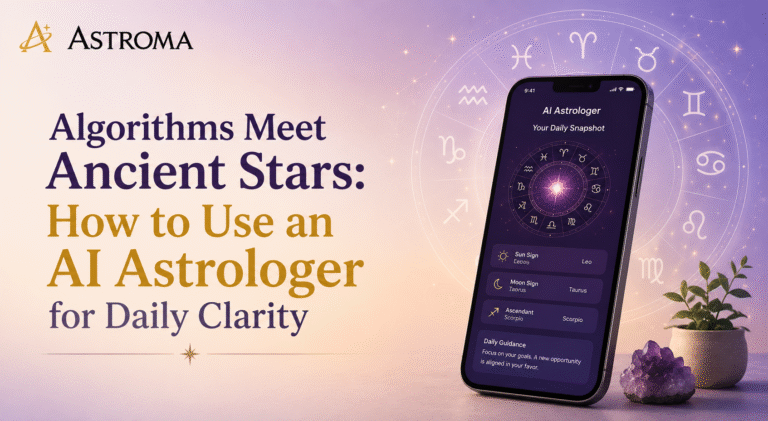
We live in an era of relentless speed. Between notifications, calendar reminders, and endless loops of modern productivity, it is easy to feel entirely unmoored. Yet, beneath the hum of modern life, an ancient human curiosity persists: What does it all mean? Where are the stars pointing today?
For centuries, looking to the heavens required consulting a scholar or deciphering dense Sanskrit texts by candlelight. Today, the landscape of cosmic self-discovery has shifted dramatically.
By combining thousands of years of Vedic mathematics with modern digital interfaces, seekers no longer have to wait weeks for guidance. Modern spiritual explorers can now access an AI astrologer free of friction, offering instant reflections on daily planetary transits right from their smartphones.
The Evolution of Cosmic Guidance: From Palm Leaves to Digital Screens
Vedic astrology—known traditionally as Jyotish, or the “science of light”—was never meant to be a rigid tool of doom. It was designed as a dynamic calendar for human consciousness. Ancient sages mapped the movements of the sun, moon, and nodes to help individuals understand the energetic weather of their lives.
However, interpreting these complex celestial mechanics traditionally required intense manual calculation. A practitioner had to map out degrees, sidereal zodiacs, and planetary aspects entirely by hand.
Today, technology has streamlined this process without stripping away its sacred roots. Platforms like Astroma have reimagined how we interact with these ancient maps, combining sleek user experiences with precise Vedic algorithms to make self-reflection accessible to anyone with an internet connection.
What is a Kundali, and Why Does Your Chart Matter?
At the heart of Vedic astrology lies the Kundali—your birth chart. Unlike Western astrology, which primarily looks at your sun sign, Vedic astrology utilizes a sidereal zodiac that accounts for the earth’s axial precession. Your Kundali is essentially a snapshot of the exact position of the planets at the moment you took your first breath.
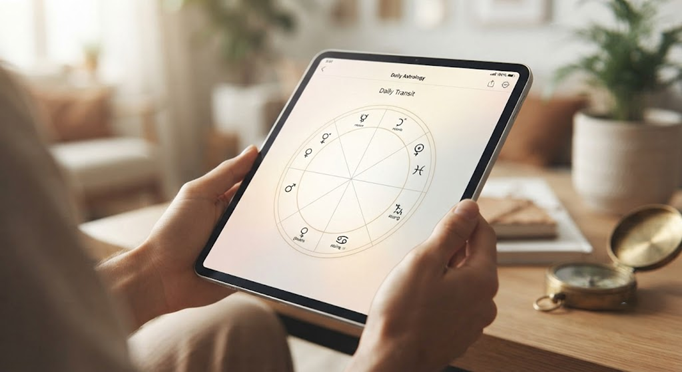
Traditionally, getting your chart drawn up was a formal affair. Today, digital tools have made this process instantaneous. Generating a free online kundali allows you to immediately visualize your core planetary placements, houses, and ruling lords without needing a background in astronomy.
Traditional vs. Modern Digital Vedic Astrology
| Feature | Traditional Approach | Modern Digital Approach (Astroma) |
| Calculation | Manual ephemeris tables and complex math | Instantaneous algorithmic calculation |
| Accessibility | Requires a local expert or in-person visit | Available 24/7 on mobile and desktop |
| Interpretation | Spoken consultations or lengthy written scrolls | Clear, structured visual breakdowns and instant text analysis |
| Cost & Time | High barrier to entry and scheduled wait times | Low-barrier exploration with immediate insights |
Bridging Ancient Wisdom with Modern AI
Can a machine truly understand something as mystical as the cosmos? The answer lies in how algorithms process structured data. Vedic astrology is fundamentally a mathematical language; the relationships between planets, houses, and constellations follow strict geometrical and philosophical rules laid down millennia ago.
An AI-powered astrological tool does not “invent” fortunes. Instead, it acts as an ultra-fast translator. It takes the precise mathematical coordinates of your birth chart and cross-references them with classical texts in seconds.
For those navigating career pivots, relationship hurdles, or creative blocks, having a digital companion available at midnight provides immediate grounding. It offers a structured way to pause, reflect, and ask: What energy am I resisting right now?
Practical Ways to Use Daily Cosmic Insights
Using astrological tools for daily clarity is less about predicting exact events and more about cultivating mindfulness. Here is how you can integrate these insights into your daily routine:
- Check the Lunar Phase: The Moon moves quickly through the zodiac, changing signs every two and a half days. Aligning your workload with the moon’s energy—using high-energy fire signs for brainstorming and grounded earth signs for administrative tasks—can reduce friction.
- Review Your Dasha Periods: Vedic astrology uses planetary time periods (Dashas) to show overarching life chapters. Understanding which planetary period you are in helps frame current challenges as temporary cycles rather than permanent roadblocks.
- Journal with Intention: Use daily micro-readings as journal prompts. If a particular planetary transit highlights your house of communication, use that day to address difficult conversations or pitch new ideas.
Frequently Asked Questions (FAQs)
Q: What is the difference between Vedic astrology and Western astrology?
Vedic astrology (Jyotish) uses the sidereal zodiac, which accounts for the gradual shift in Earth’s axis, placing your chart about 23 degrees behind tropical Western astrology. It also places heavy emphasis on the lunar nodes (Rahu and Ketu) and nakshatras (lunar mansions) for deep psychological insight.
Q: Do I need my exact birth time to get an accurate chart?
Yes. Because the Ascendant (rising sign) changes approximately every two hours, having your exact minute of birth ensures your house cusps and planetary distributions are completely accurate.
Q: Is an AI-generated astrological reading reliable?
AI tools excel at the mathematical and interpretive frameworks of classical texts. While they provide fantastic structural clarity and daily reflections, they complement rather than completely replace the nuanced intuition of a human master astrologer for major life decisions.
Q: Can I use these insights to make major financial or career decisions?
While daily transits and planetary periods offer wonderful emotional and psychological frameworks for reflection, major life decisions—such as changing careers or making large investments—should combine your astrological insights with practical logic, professional advice, and personal intuition.
Q: How often should I check my astrological transits?
Checking your chart or daily cosmic updates once a week or at the start of a new lunar phase is usually ideal. Treating it as a mindful weekly check-in prevents you from over-analyzing every minor planetary movement and helps you stay focused on the bigger picture.
