

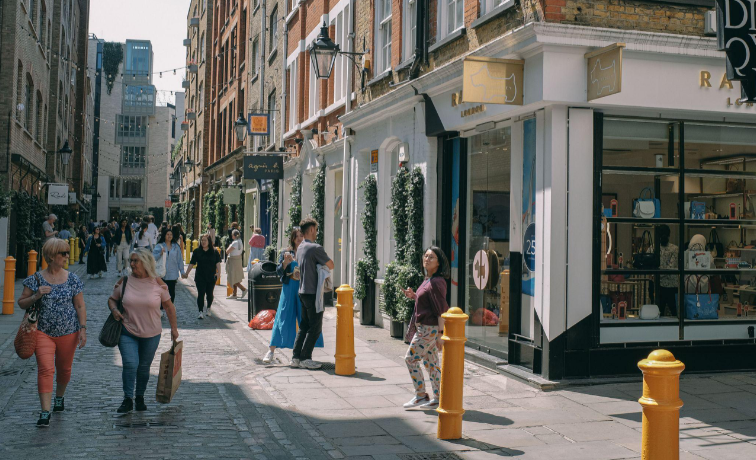
The British high street has spent the better part of the last decade being written off. Empty units, collapsed department stores, the usual doom-laden headlines. And honestly, a lot of it was justified. But something has quietly started to shift, and it’s worth asking whether this is a genuine recovery or just a brief lull before things get worse again.
What Caused the Decline of the High Street?
Online shopping is the obvious culprit. It made buying things easier, cheaper, and faster than most physical stores could compete with. Why bother with parking and queues when the thing you want shows up the next morning? A lot of traditional retailers didn’t adapt quickly enough, and they paid for it.
Then the pandemic hit, and what had been a slow decline turned into something much sharper. Lockdowns closed shops for months. Many didn’t reopen. The chains that collapsed left gaps in town centres that sat empty for a long time, and even after restrictions lifted, footfall didn’t bounce back the way anyone hoped. People had gotten used to staying home – for work, for shopping, for most things really – and that habit stuck around longer than expected.
Part of it was also that convenience stopped feeling like a compromise. Same-day delivery, endless product options, no awkward shop assistants – online retail had become genuinely good. For anything fairly standard, the case for going to a physical store got harder to make.
Are There Real Signs of Revival?
There are, though it’s patchy. Some shops are leaning into the idea that the store itself needs to be a reason to visit – events, workshops, things you can actually do rather than just buy. It sounds a bit gimmicky, but it seems to be working in places. Flagship stores are coming back with layouts that feel less like warehouses and more like somewhere worth spending an hour.
Independents have been filling some of the gaps left by chains, which has helped. They’re harder to replicate, they carry personality, and there’s often a story behind them. Social media has pushed this along too – Instagram and TikTok have made it fashionable, in some circles at least, to find and support local businesses.
There’s also a more basic thing going on. After years of lockdowns, people wanted to be somewhere. Shops, cafes, markets – anywhere that felt social. Online shopping doesn’t give you that, and retail areas that figured this out early seem to be doing better for it.
What Does Success Look Like for Today’s High Street?
The shops that seem to be doing well aren’t treating online and in-person as separate things. Customers want to look something up online, check whether it’s in stock, and then walk in already knowing what they want. Businesses that make that journey easy tend to see the benefit.
Community has started to matter in a way it probably didn’t before. Shops hosting local makers, running events, becoming part of the neighbourhood rather than just a place to spend money – that kind of thing builds a loyal customer base that’s genuinely difficult for a chain to copy. There’s also more interest in buying local and buying sustainably, though how much of that translates into actual spending behavior varies.
Technology is changing the in-store experience too, mostly in quieter ways. UK shops ditching cash in favour of digital payment systems has become fairly standard. It speeds things up and offers some of the online convenience in-store.
What’s Next for British Retail?
No one’s pretending the high street is going back to what it was. That version of retail is gone. But there’s a version emerging that’s more flexible, more community-minded, and more honest about what a physical shop can actually offer that the internet can’t. Whether that’s enough to sustain it long-term probably comes down to individual businesses, individual towns, and how willing both are to keep adapting.
