

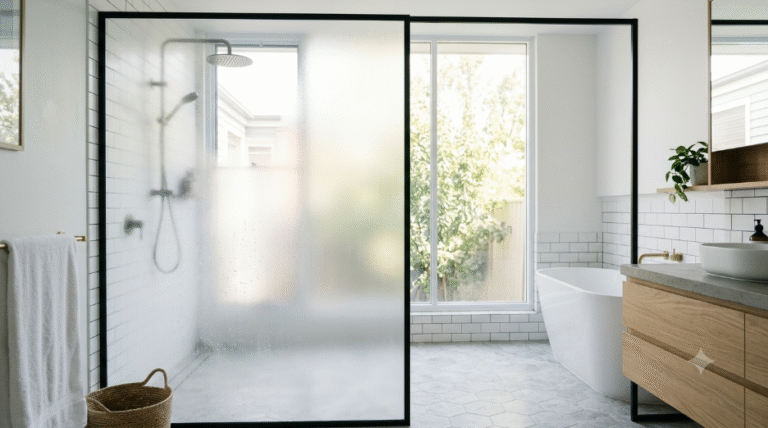
Ask any interior designer how to get privacy without dimming a room, and frosted acrylic comes up fast.
A frosted acrylic sheet scatters light across its whole surface, so the view blurs, but the brightness stays. It solves something that frosted glass and blinds tend to get wrong. Professionals have leaned on it for years, and homeowners are now starting to notice.
The trick is diffusion. Light passes through and spreads, rather than hitting a hard edge of shade. That one behaviour is why the material has become such a studio staple.
What Makes Frosted Acrylic Different From Frosted Glass?
The obvious difference is weight, which changes everything about how the sheet is used. A frosted acrylic sheet weighs roughly half as much as a glass sheet of the same size. Overhead, that makes it safer, and on a wall, it needs nothing like the same bracketing.
There is a subtler difference too. The frosting is embedded in the material rather than etched onto one face, so cleaning never wears it away. Glass etching can dull over the years. This holds its finish and keeps looking the way it did on day one.
Light also moves through the two quite differently. Here is how they stack up in a real interior:
| Property | Frosted acrylic | Frosted glass |
| Weight | Light, easy to fix | Heavy, needs support |
| Light diffusion | Soft and even | Sharper falloff |
| Safety | Shatter resistant | Shatters on impact |
| Cutting | Trims on site | Needs a glazier |
All of which explains why it turns up in the awkward spots. Where glass would be heavy, risky, or slow to fit, acrylic just works.
How Do Designers Use Frosted Acrylic for Room Division?
Room division is where the material really earns its keep. A panel of acrylic sheet cut to size screens a view while keeping both sides bright, which suits open-plan homes that would otherwise go dark behind a solid wall.
Placement is everything, and the good uses tend to be specific. Put a frosted panel between a home office and the living room, and video-call clutter disappears from view. Fit one across a stairwell, and the landing stays private while daylight still spills down into the hall.
Small flats gain the most here. One sheet can separate a sleeping nook from the living space without either half feeling shut in, because the window light still travels through.
Sliding frosted panels push the idea further. You open the division for morning light, then slide it closed when the evening calls for privacy. It adapts to the day rather than fixing you to one arrangement.
Where Does Frosted Acrylic Beat a Coloured Finish?
Sometimes softness matters more than a bold splash of colour, and that is frosting’s territory. A coloured acrylic splashback adds vibrancy to a wall, whereas frosting brings calm and diffused light. Plenty of designers use both, letting colour make the statement while frosting does the quiet screening.
It works especially well in rooms that already carry strong colour somewhere. Rather than adding another tone to compete, the frosted finish grounds the scheme. That kind of restraint is often what separates a decorated room from a properly designed one.
Bathrooms show the balance nicely. A coloured acrylic splashback behind the basin adds personality right at eye level, and a frosted panel on the window then handles privacy without a bulky blind.
Can Frosted Acrylic Work in Kitchens and Bathrooms?
Yes, and moisture is exactly where it proves itself. Steam and splashes leave it unbothered, with none of the swelling or staining you would get from untreated timber. That makes it a genuinely practical pick for the wettest corners of a home.
Kitchens benefit in a way people rarely expect. The material takes harsh under-cabinet lighting and softens it into something comfortable. Set a frosted acrylic splashback behind open shelving, and the jars behind it blur into a tidy haze, so the worktop reads as calm even when the shelves are a working mess.
In bathrooms, it is the privacy that wins people over. A frosted window panel lets morning light in while keeping the room screened from the outside. You stop needing blinds, which is a relief given how they trap damp and collect grime.
Upkeep is simple. A soft cloth and a little mild soapy water keep it clear, and the frosting quietly hides fingerprints and water spots that a clear panel would show.
How Does Frosting Compare With Gloss and Clear Panels?
Frosting, gloss, and clear each chase a different goal, so it helps to know which does what. A gloss acrylic sheet reflects light and adds shine, while frosting scatters that same light and softens it. A clear perspex sheet, by contrast, shows everything behind it, making it a display material rather than a privacy material.
The choice really comes down to what the space is asking for. Designers tend to sort it like this:
● Frosted: privacy with soft, even light for dividers and windows
● Gloss: brightness and reflection for feature walls and backdrops
● Clear: full visibility for display cases and protective covers
More often than not, a single project uses all three. Gloss lifts a dark corner, clear protects a shelf, and frosting screens a view, and together they build a depth that no one finish manages alone.
What Should You Check Before Ordering Frosted Panels?
Start with the measurements, because a precise fit is what makes the whole thing look professional. Order your acrylic sheet cut to size, and it turns up ready to install, with no fiddly trimming once you are up a ladder. All you need to confirm first is your dimensions and how you plan to fix them.
Thickness is worth considering too, especially on larger panels. A thicker sheet holds firm across a wide partition or a tall window without bowing, whereas a thinner sheet is fine for smaller-framed openings that already have support.
Before you order, it is worth running through a few quick checks:
● Measure the opening twice and note the exact millimetres
● Decide on adhesive fixing or a framed channel in advance
● Choose a thickness that matches the panel’s size and span
Nail those details and the panel fits cleanly the first time round. A well-planned frosted acrylic sheet then just gets on with its job quietly for years.
Bringing Light and Privacy Into Balance!
Frosted acrylic hands designers something genuinely rare, which is privacy that never costs you a scrap of daylight. It divides rooms, screens windows, and softens light, all while staying light enough to fit safely almost anywhere. That range is exactly why it keeps showing up in carefully considered interiors.
So have a look at where your own home loses light to blinds or heavy screens. A frosted panel will often fix that very problem, and with a good deal more grace. What you get back is a space that feels bright, private, and clearly thought through.
FAQs
Does a frosted acrylic sheet block natural light?
Not at all, it diffuses the light rather than blocking it. The room stays bright while you gain privacy from any direct line of sight.
Can frosted acrylic be cut to fit an odd-shaped window?
Yes, each panel is cut to your exact measurements before it ships. That makes it ideal for the unusual window shapes blinds never quite suit.
Is frosted acrylic suitable for a bathroom window?
It is, since it handles steam and splashes without swelling or staining. The frosting screens the view while daylight still fills the room.
How do I clean frosted acrylic panels?
A soft cloth with mild soapy water is all it takes. Skip abrasive pads; gentle cleaning keeps the finish even and clear.
