

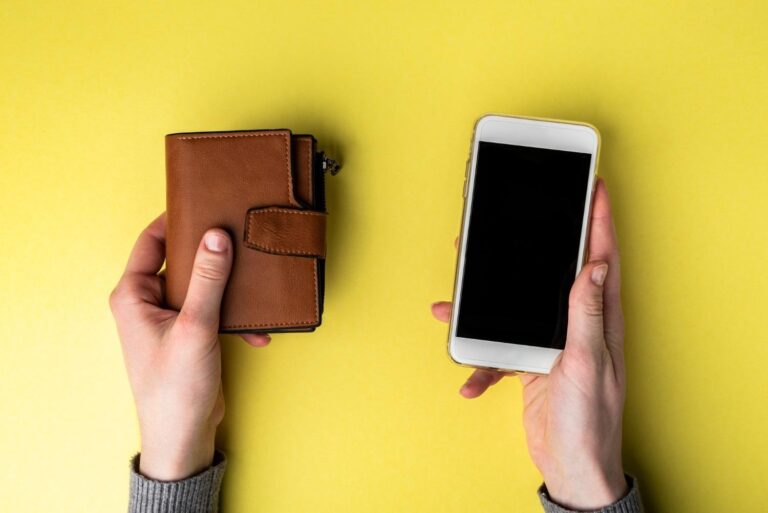
Not long ago, leaving the house without your wallet was a minor crisis. Keys, phone, wallet, the three-item checklist that preceded every journey out the front door. Today, for a growing number of people, that checklist has quietly become two items. The wallet, in any meaningful sense, has migrated into the phone. And the shift has happened faster than almost anyone predicted.
The move toward mobile-first payments is not simply a story about technology. It is a story about behaviour, about how habits change when friction is removed, and what happens to entire industries when the barrier between wanting something and paying for it collapses to a single tap.
The Conditions That Made It Possible
Smartphone penetration in the UK reached levels that made mobile-first consumer behaviour structurally inevitable. When the majority of the population carries a powerful connected device at all times, the question stops being whether payments will shift to that device and becomes when, and how fast.
The enabling technologies arrived in sequence. Contactless card payments normalised the idea that transactions did not require PINs or signatures. NFC chips made tap-to-pay physically possible at terminals across the country. Then Apple Pay and Google Pay abstracted the card itself away, replacing it with a device and a biometric. Each step reduced friction. Each reduction in friction accelerated adoption.
The pandemic compressed what might have been a decade of gradual change into roughly eighteen months. Cash handling became a hygiene concern. Contactless limits were raised. Businesses that had resisted digital payments scrambled to implement them. Consumers who had never paid with their phones found themselves doing so out of necessity, discovered it was easier than what it replaced, and did not go back.
What Mobile-First Actually Means for Consumer Behaviour
The phrase mobile-first is used loosely, but in the context of payments it has a specific meaning: the phone is not a backup option or a secondary channel. It is the primary interface through which a consumer engages with their finances, their purchases, and their accounts.
This shift has implications that go well beyond the moment of transaction. A mobile-first consumer checks their balance on their phone, receives spending notifications on their phone, disputes a charge on their phone, and splits a bill with friends on their phone. The bank branch, the phone call to customer services, the desktop banking portal, all of these have been displaced for the majority of everyday interactions.
The commercial consequences have been significant. Financial services companies that built their competitive advantage around physical presence have had to rebuild around digital experience. Retailers that ignored their mobile checkout flow have paid the price in abandoned baskets. Platforms of every kind have learned that a mobile experience that introduces unnecessary steps or loads slowly is not merely inconvenient but commercially punishing.
The Industries That Had to Adapt Fastest
Certain sectors felt the mobile-first shift more acutely than others, largely because their product was consumed on the same device through which payment was now expected to happen.
Streaming platforms were early beneficiaries. The combination of in-app purchases, subscription management, and consumption all happening on a single device created a seamless loop that felt natural to mobile-first consumers. Spotify, Netflix, and their competitors built their growth partly on the frictionlessness of that loop.
Food delivery followed a similar logic. Ordering, paying, and tracking a delivery from a single app eliminated every step that previously required effort. The consumer’s phone became the entire transaction from discovery to doorstep.
Online entertainment platforms, including gaming and casino sites, were also forced to rethink their deposit and payment flows for mobile users. Players increasingly expect to fund an account and start playing within seconds, directly from their phone. UK-licensed platforms like MrQ have responded to this by building mobile-first deposit experiences around debit cards, PayPal, and bank transfers, with Apple Pay and Google Pay on the way, positioning themselves as a pay on phone casino option for users who expect the same instant, low-friction experience they get from any other mobile platform. The underlying expectation is the same whether someone is buying a film rental or funding an entertainment account: one tap, instant result, no detours.
The Trust Problem That Mobile Payments Had to Solve
The shift did not happen without resistance. For a significant portion of the population, particularly older consumers and those with strong privacy concerns, handing payment authority to a device felt inherently risky. The question of what happened if the phone was lost, stolen, or compromised was a legitimate barrier to adoption.
The resolution came from a combination of technological and regulatory factors. Biometric authentication, fingerprint and face recognition, made mobile payments significantly harder to misuse than a stolen physical card. Strong Customer Authentication requirements under UK financial regulation added a second layer of verification to higher-risk transactions. And the track record of contactless and mobile payments, accumulated over millions of daily transactions, gradually demonstrated that the risk profile was manageable.
Consumer confidence in mobile payments has grown substantially as a result, and the UK Payments Authority has documented the steady growth in mobile payment volumes year on year, with no corresponding surge in fraud rates that the early sceptics predicted.
Where the Mobile Wallet Is Going Next
The current state of mobile payments, tap-to-pay with a saved card via a digital wallet, is not the end point. It is one stage in an ongoing compression of the distance between intention and transaction.
Open banking, which allows third-party applications to initiate payments directly from a consumer’s bank account with their permission, is beginning to change the infrastructure beneath consumer payments. Rather than routing through card networks, open banking payments flow directly between accounts, reducing costs and creating new possibilities for how payment experiences are designed.
Buy now, pay later functionality has embedded itself into mobile commerce flows, changing how consumers think about the timing of payment rather than simply its mechanics. Super apps, platforms that combine messaging, social features, commerce, and payments in a single environment, are well established in Asia and are beginning to find footholds in Western markets.
The direction of travel is consistent: less friction, more integration, payments that feel less like a separate step and more like a natural conclusion to whatever the consumer was already doing on their phone.
The Wallet That Stayed Home
The physical wallet has not disappeared entirely. Cards still exist. Cash still circulates, albeit at volumes that decline each year. There are contexts, demographics, and preferences where physical payment instruments remain important, and a payment ecosystem that serves everyone needs to account for that.
But the centre of gravity of consumer payment behaviour has shifted, and shifted permanently. The phone in a pocket is, for most people under a certain age and a growing number above it, the primary financial instrument. The wallet left at home is no longer a crisis. For many, it has become a choice.
That change, unremarkable as it feels day to day, represents one of the more profound shifts in consumer behaviour in the last two decades. The industries that understood it early built for it accordingly. The ones that understood it late are still catching up.
