

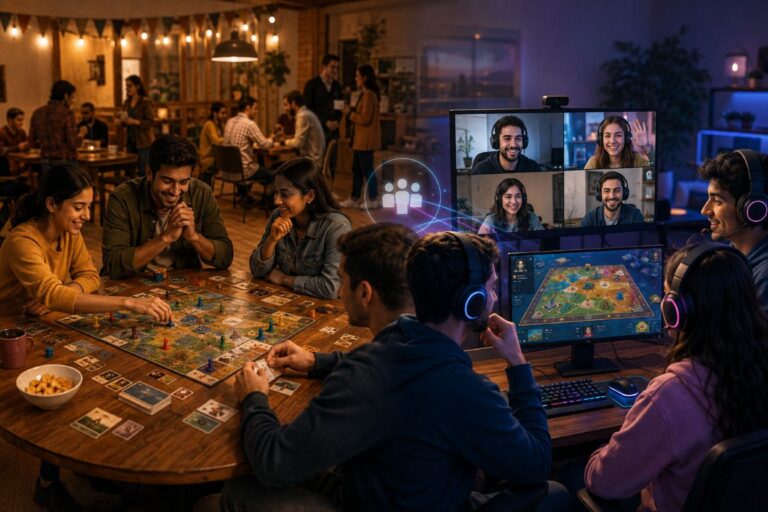
Long before screens dominated the living room, a quiet evening usually involved clearing off the dining table or heading to a local hall for a shared pastime. Those physical gatherings anchored our weekends.
Today, you might assume technology has replaced those communal traditions entirely. Yet, if you look closely at how you spend your free time now, you will notice those analogue roots heavily dictate your digital choices.
Why Traditional Social Activities Still Influence Entertainment
You seek out digital formats that replicate the atmosphere of a busy parlour. Developers recognise this desire, building platforms that mirror the pacing and interaction of traditional tabletops.
Instead of passively consuming media, you actively participate in environments designed around turn-taking and shared goals. Take note of how your favourite online platforms structure their lobbies just like physical waiting rooms.
From Board Games to Digital Multiplayer Experiences
The heavy wooden pieces and thick cardstock of traditional tabletop games gave way to glowing interfaces, but the core mechanics remain intact. You now log into servers to coordinate complex campaigns with peers, swapping physical dice for random number generators.
To bridge this gap yourself, schedule a weekly virtual board game night with your peers using platforms that emulate tabletop mechanics. You will find the strategic depth matches the physical versions perfectly.
The Lasting Appeal of Friendly Competition
Competing against peers provides a focused outlet for your energy. Engaging in a contest requires your full attention, drawing you away from daily distractions. You test your strategies against opponents in real-time, responding to their moves immediately to secure an advantage.
Try organising an ongoing tournament framework for your preferred online matches. Tracking these long-term outcomes adds a satisfying layer of involvement to your weekly sessions.
How Nostalgia Shapes Modern Leisure Trends
Fond memories of crowded community venues drive developers to recreate those exact environments online. You gravitate towards digital equivalents of classic hall activities because they offer familiar structures within convenient modern wrappers.
When you load up a bingo app on your smartphone, you participate in a direct continuation of a classic social tradition. Notice how the digital callers and virtual interface elements mimic the physical equipment seamlessly.
Recreating Community in a Digital World
Physical community halls once provided a central hub for evening entertainment. Today, digital servers and voice channels fulfil that exact role. You gather in dedicated digital spaces to share experiences, mirroring the structure of traditional clubs.
Set up a dedicated voice channel before your next multiplayer session to capture that organic chatter. The background conversation perfectly replicates the atmosphere of a lively entertainment venue.
What Pre-Internet Pastimes Can Teach Us About Future Entertainment
The most successful future platforms will always respect their analogue predecessors. You will continue to adopt new technologies faster when they ground their mechanics in familiar social interactions.
Virtual reality headsets and augmented displays still rely on the basic premise of sitting around a table together. Look for future innovations that prioritise shared presence over isolated consumption. Technology changes, but your desire for shared human interaction remains constant.
