

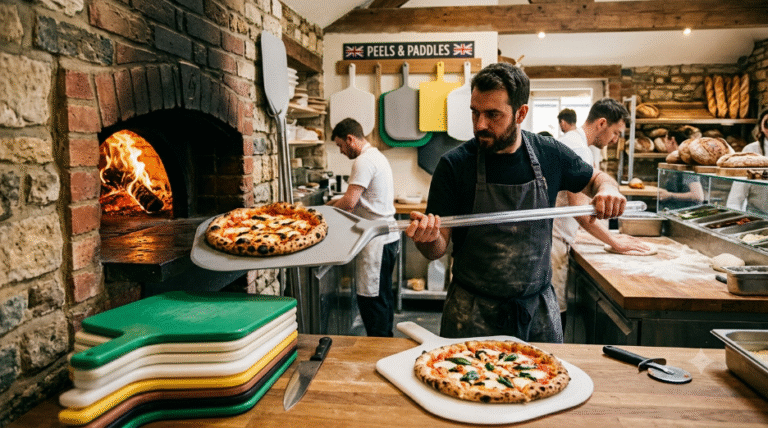
The paddle chopping board has become a favourite in British pizzerias and bakeries because it handles prep and serving on one surface. Its long handle lets staff lift and present food without ever touching the hot base.
That single feature saves precious minutes during a busy service. Kitchens that once relied on flat, rectangular boards are now switching to them in growing numbers.
The shift reflects how much faster a well-designed board makes a working kitchen.
What Makes a Paddle Chopping Board Different From a Standard Board?
A paddle board differs from a standard one through its extended handle and rounded working head. The handle provides staff with a firm grip when lifting or moving food throughout the kitchen. That grip matters most when a surface is loaded and needs to be carried at speed.
The head performs the same cutting function you expect from an ordinary kitchen chopping board. Yet the added handle changes how the whole board is used day to day. It can hang neatly on a rail at the end of the shift, keeping counters clear.
Most paddle boards are cut from food-safe polyethylene rather than wood. LDPE resists moisture and will not crack during repeated washings. It also stays flat instead of warping, even after months of daily use.
Why Are UK Pizzerias Choosing Paddle Boards?
Pizzerias are choosing paddle boards because one surface takes a pizza from prep to plate. A pizza chopping board lets the chef slice, portion, and present without having to move the food. That flow keeps the counter moving during a packed evening rush.
The angled handle also makes table service feel effortless and clean. The waiting staff carry the board straight out, with the pizza still hot and fresh. Guests get a rustic presentation that fits the character of a good pizzeria.
Speed at the pass is where these boards really prove their worth. Consider the difference across a single busy night:
● One board covers cutting, portioning, and serving in a single motion
● Staff avoid extra trips to fetch trays or serving plates
● The handle keeps fingers away from the freshly baked base
That combination trims wasted movement from every order. Over the course of a full service, those saved seconds add up to real efficiency.
How Do Paddle Boards Help Busy Bakeries?
Bakeries rely on paddle boards because the handles make transferring dough and loaves much safer. A baker can slide a hot loaf onto the head and carry it clear of the oven. That reduces the risk of burns during the busiest morning bakes.
The flat working surface makes shaping, scoring, and portioning a breeze. A well-made pizza chopping board doubles neatly for pastry and bread work in smaller bakeries. This flexibility means fewer separate tools cluttering a tight production space.
Hygiene stays simple, which matters greatly in any food setting. The non-porous surface wipes down quickly between different batches and doughs. Staff can move from savoury to sweet without dragging flavours across.
Storage is another quiet advantage worth mentioning here. The handle lets each board hang up and air-dry properly after cleaning. Air drying keeps moisture from settling and protects the surface over time.
Are Paddle Boards Built for Commercial Kitchen Demands?
Paddle boards are built to survive the pressure of a full commercial kitchen. A commercial chopping board made from food-grade LDPE takes daily chopping without splitting. The material shrugs off knife marks better than cheaper imported alternatives.
Durability shows most clearly in how these boards handle heat and washing. They stay stable through repeated dishwasher cycles at high temperatures. Unlike lesser boards, they resist the warping that ruins a flat surface.
Colour coding brings another layer of safety to professional sites. A dedicated professional chopping board in each colour helps prevent cross-contamination between food groups. Here is how the standard UK system works in practice:
| Colour | Food group |
| Red | Raw meat |
| Green | Salad and fruit |
| White | Bakery and dairy |
| Yellow | Cooked meat |
Bespoke sizing rounds out the appeal for high-volume kitchens. Boards cut to your exact dimensions fit the counter or oven you already have. That tailored fit removes the compromise of settling for a standard size.
What Should You Look For When Buying a Paddle Board?
Look first at thickness, since it decides how well a board holds up over the years. A thicker board resists flexing and stays reliable through heavy daily chopping. Most busy kitchens do well with a board between 12mm and 25mm.
Handle length deserves close attention too, as it shapes how the board feels in use. A longer handle suits reaching into deep ovens or across wide counters. A shorter one works better where storage space runs tight.
Material grade is the detail that many buyers overlook at first. Quality kitchen chopping boards are made from food-safe polyethylene that meets proper hygiene standards. Cheaper materials may look similar yet fail far sooner under real pressure.
A few practical checks help you buy with confidence:
● Choose cut-to-size options so the board fits your exact setup
● Add a juice groove if you handle wet ingredients regularly
● Match the colour to the food group you prepare most
Getting these details right means the board serves you for years. The paddle chopping board rewards a little thought at the buying stage with lasting daily value.
FAQs
What is a paddle chopping board used for?
It is used for preparing, slicing, and serving food on one handled surface. Pizzerias and bakeries favour it because the handle makes carrying hot food safer.
Are paddle boards good for cutting pizza?
Yes, the flat head gives a stable base for slicing and portioning a pizza. The handle then lets staff carry it straight to the table.
What material are paddle chopping boards made from?
Most are made from food-safe LDPE polyethylene, which resists moisture and warping. This grade withstands daily chopping and repeated high-temperature washing.
Can I get a paddle board cut to size?
Yes, boards are cut to your exact length and width on request. Bespoke sizing means the board fits your counter, oven, or serving station precisely.
How do I clean a paddle chopping board?
Wash it in hot soapy water or a high-temperature dishwasher cycle. Hang it by the handle afterwards so it air-dries fully and stays hygienic.
