

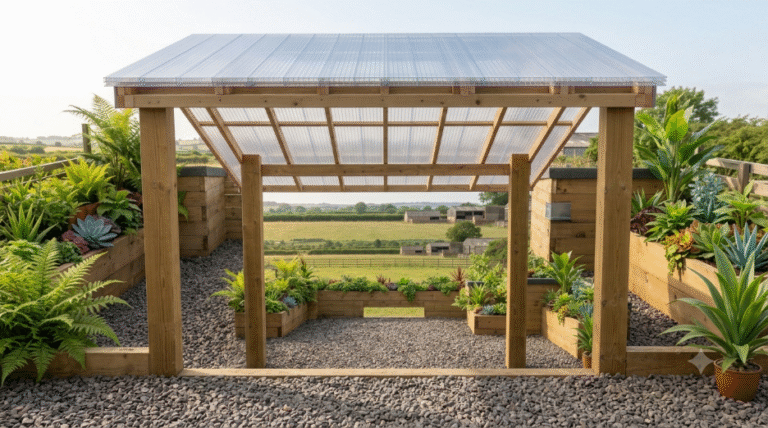
Waterproofing a flat roof is less about the panel you pick and more about what happens at its edges. Polycarbonate roofing sheets will keep a room bone dry for a decade, provided the laps, seals, and falls are handled properly. Leave any of those three half-finished and water quietly finds its way beneath the surface. What follows is the method a working contractor uses, laid out in the order the job actually happens.
One thing catches most people out before they even start. A flat roof is never meant to be truly level, because a gentle fall is what carries rainwater away to the gutter. Everything else in this guide rests on getting that slope right.
Why Choose Polycarbonate for a Flat Roof at All?
Weight is usually the reason a contractor reaches for polycarbonate first. Polycarbonate roof sheets weigh a fraction of glass, so the supporting structure takes far less strain. On an older garage or extension, that lighter load can save a whole rebuild.
Then there is the light. Unlike felt or metal, these panels let daylight through, which transforms a dim space below. A workshop or utility room suddenly works without the light switch on all day.
Durability seals the case for most jobs. Consider what the material handles without complaint:
● Hail and heavy rain without cracking or denting
● UV exposure, thanks to a co-extruded protective layer
● Thermal movement, which it absorbs rather than resisting
That mix of light weight, daylight, and resilience is hard to beat. For a low-pitch roof, it often makes more sense than any traditional covering.
What Materials and Tools Does the Job Need?
Good preparation saves hours later, so gather everything before the first sheet goes up. A contractor lays out the panels, the glazing bars, and the sealing components in one place. Working from a complete kit stops those frustrating mid-job trips to the merchant.
Here is the core list most flat-roof jobs rely on:
| Item | Purpose |
| Polycarbonate panels | The main waterproof surface |
| Glazing bars | Secure and seal panel joints |
| End caps and tape | Close the open flutes |
| Foam or EPDM strips | Seal the perimeter |
| Stainless fixings | Fasten without rusting |
Ordering polycarbonate roofing sheets cut to size removes the trickiest step from site work entirely. The panels arrive ready to lay, so there is no awkward trimming up a ladder. That precision is where a clean, watertight finish really begins.
How Do You Set the Right Fall for Drainage?
Fall is the detail amateurs skip and professionals never do. Water needs somewhere to go, and gravity only helps when the surface is angled. A contractor aims for a minimum fall of around 1 in 80 across the roof.
You create that slope with firring strips laid along the joists. These tapered timbers lift one end so the whole surface tilts gently toward the gutter. Skip this and water simply pools, which is where nearly every flat-roof leak starts.
Check the fall before anything else goes down. A long spirit level across the firrings confirms the slope runs the right way. This one check prevents the most common cause of failure down the line.
Step by Step: Laying and Sealing the Sheets
With the fall set, the sheets go down in a clear sequence. Flat roof polycarbonate work rewards patience here, since rushing the seals undoes everything else. Follow the order below and the roof stays dry for years.
1. Seal the flutes. Tape the top edge solid and the bottom with breather tape, so trapped moisture can escape.
2. Fit the end caps. Clip these over the taped ends to keep insects and dirt out of the channels.
3. Position the first panel. Lay it square to the fall, with the flutes running down the slope toward the gutter.
4. Set the glazing bars. Screw the base bars to the rafters, then clip the top caps over each joint.
5. Fix the panels down. Use stainless screws with sealing washers, driven firm but never overtightened.
Overtightening is a classic mistake worth flagging twice. Polycarbonate expands and contracts with temperature, so the fixings need a little room. Crush the sheet tight and it will crack at the first cold snap.
Seal the perimeter last with foam or EPDM strips. This closes the gap where the panels meet the surrounding wall or fascia. A neat perimeter is what turns a good roof into a genuinely watertight one.
What Does Solid Polycarbonate Add for Waterproofing?
Some jobs call for a stronger, flatter sheet, and that is where solid comes in. Solid polycarbonate roofing sheets carry no internal flutes, so there is nothing for water to track through. On a low-pitch roof over a habitable room, that simplicity is reassuring.
Solid sheets also handle foot traffic better during maintenance. A contractor can move across them with care to clear leaves or check a seal. Multiwall panels flex more, which makes that kind of access trickier.
The trade is cost and insulation, and it is worth being honest about it. Solid sheets insulate less than multiwall, though they win on clarity and strength. For a garage or carport, that balance often lands in their favour.
The Contractor’s Take: Where Roofs Actually Fail
After enough call-backs, a pattern emerges, and it is rarely the sheet itself. Polycarbonate roof sheets almost always fail at the joints, the fixings, or the fall. The panel in the middle of a run is the last place water gets in.
Most leaks trace back to three avoidable errors. Fixings driven too tight, flutes left unsealed, or a fall too shallow to clear the rain. Fix those three and a roof will outlast the building it sits on.
Garage roofs are the classic example of this. Cheap garage roof sheets slapped on without proper falls leak within a season or two. The same panels, laid with care and correct falls, stay dry for a decade.
That is the real lesson from years on the tools. The material is only ever as good as the hands that fit it.
Getting a Roof That Stays Dry for Years
A waterproof polycarbonate roof comes down to falls, seals, and honest fixing. Set the slope, seal every flute and joint, and never crush the panels tight. Do that and the water has nowhere to go but the gutter.
Order your panels cut to size, gather the full kit, and take the seals slowly. Polycarbonate roofing sheets fitted this way reward the effort with years of dry, bright space below. The care you take on day one is what keeps the roof quiet ever after.
FAQs
Can polycarbonate sheets fully waterproof a flat roof?
Yes, when the fall, laps, and seals are done properly. The panels shed water well, though the sealing detail is what keeps it out.
What fall does a polycarbonate flat roof need?
Aim for a minimum fall of around 1 in 80. That slope moves water off the surface before it can pool and leak.
Why do polycarbonate roofs leak over time?
Most leaks come from overtightened fixings, unsealed flutes, or too shallow a fall. Correct those three and the roof stays reliably dry.
Are solid or multiwall sheets better for a flat roof?
Solid sheets offer strength and clarity with no flutes to trap water. Multiwall insulates better, so the choice depends on the room below.
