

Awareness campaigns are one of several competing messages in people’s feeds, and most nonprofits’ content, no matter how compelling the cause, is in the same visual language as infographics and donation calls that everyone has grown desensitized to. An interactive game does that, though – it causes people to do something besides simply watching – and that little action engenders much greater interest in the cause than any static number of people ever could.
The reason why most nonprofits have failed is that they have not had enough resources. In the nonprofit world, development budgets are scarce, and a custom interactive experience has been impossible for all but a few well-funded, big organizations. An ai game builder eliminates that hurdle and enables the non-technical team of a nonprofit to explain what kind of experience they want and have a working and shareable version of the game within a short period.
Turning a Statistic Into an Experience
This was the first time that a statistic was turned into an experience.
Numbers are often used in the nonprofit sector to start a conversation, to share the number of people impacted, the amount of funding required, but ultimately, numbers alone are not sufficient to motivate people to take action. The more the player is in the situation being portrayed, the more empathy they’ll have for the situation the nonprofit is trying to fix, as in a scenario rather than a statistic. Our guide to narrative games shows you how to make a short, scenario-based experience communicate the stakes of a cause without having to build a long and complicated experience.
This doesn’t imply that all campaigns must be dry and dull from start to finish – there are lots of successful awareness games that play up to their subject in the opening few moments before dropping the more serious message later.
Formats That Fit Common Nonprofit Goals
- Simulation-style scenarios: putting players in a simplified decision-making role related to the cause
- Quick trivia or myth-busting games: correcting common misconceptions about an issue in an engaging format
- Donation-tied mini-games: a short, shareable experience linked to a specific giving campaign or matching period
The mini-games format is effective for short, simple, easy-to-share awareness pieces because they require very little time investment from the player, and still convey the message.
Building Without a Technical Team
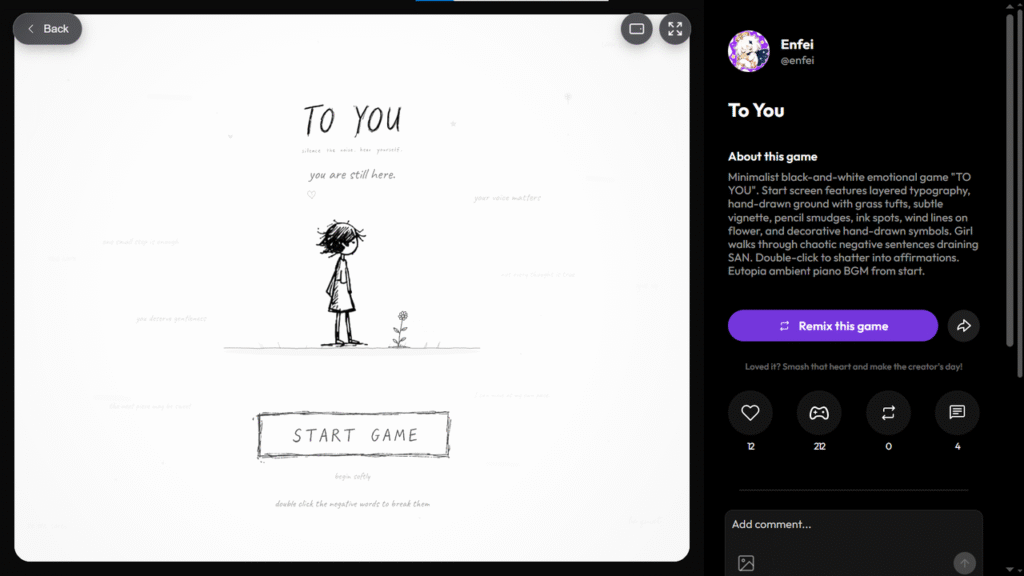
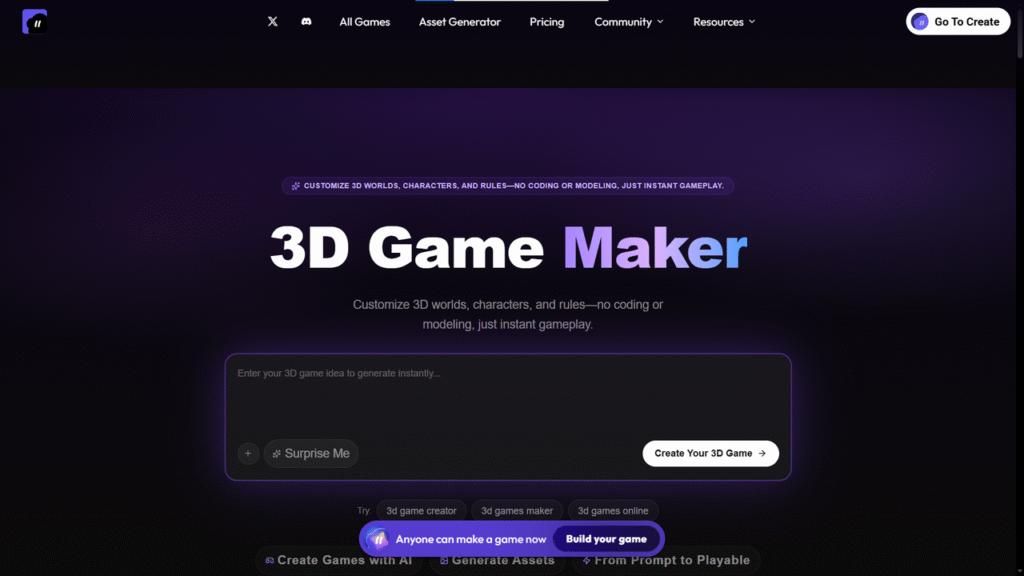
It begins with campaign message description and the experience you want to provide to Boo, the AI game agent of the platform. The design document can be reviewed by a non-profit communications lead, who can tweak anything that isn’t quite getting the message across and publish it without involving external technical support. It is a significant amount for organisations that are ever mindful of campaign costs, as it eliminates an entire line item for development costs. In a 3D game maker online, the same process applies to a campaign that should seemingly be more immersive, with a walkthrough feel.
Being Careful With Sensitive Subject Matter
There is a lot of hard and sensitive material, health issues, violence, poverty, loss, in many non-profit issues. This is a critical period in the development of any game when the attention is paid to these matters; make sure the tone doesn’t cheapen the topic, that all the statistics you use are true and that the experience does not treat the people involved in the topic with disdain or lightness, reducing them to mere game pieces. Whether the build process is fast or slow, this is not something that needs to be done in a hurry.
Measuring Impact Beyond Play Count
But not only the number of people who played, but whether the game resulted in the action you intended – either a donation, signature or a share to another person’s network. If this is a game that does not lend itself to conversion to action, it may require a stronger call to action, one that is built into the game and can be tested and refined within a campaign and not taken for granted as engagement is the intended objective.
Working With Volunteers Instead of Contractors
Many nonprofits don’t use paid contractors for communications and outreach; a prompt-driven build process is well suited to this reality, as a volunteer whose strength lies in writing can create a working game without needing a volunteer with technical and design skills specifically. This increases the number of people that can be involved with the interactive component of a campaign, and is important for organisations that cannot always have a technically proficient volunteer when it is time to launch a campaign.
It also equates to a faster campaign start time around time-sensitive moments, a natural disaster response, a legislative deadline, an annual observance day, and more – without waiting for a development partner.
Why This Matters for the Nonprofit Sector
The development cost barrier is not only the difference between interactive campaigns vs traditional ones in terms of cost, it’s also the fact that small, under-resourced organizations who had no realistic way to get interactive campaigns prior to this barrier have now become a reality. It’s a positive change in a sector where budgets tend to dictate whether a cause receives sophisticated outreach or not, even if the actual issue is important and urgent.
