

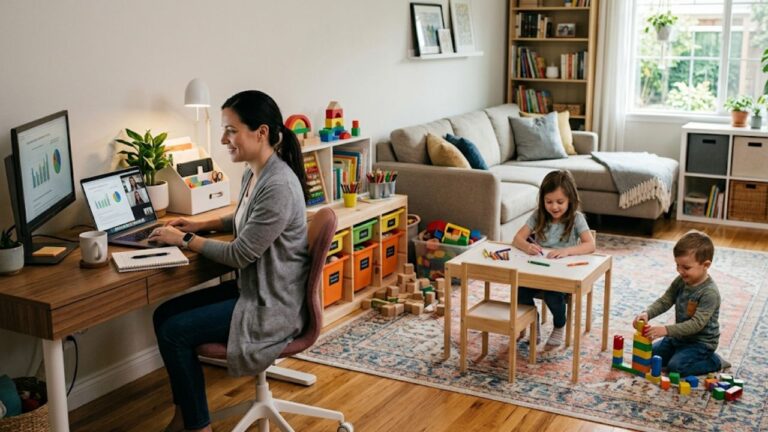
Working from home with children in the house is a daily negotiation between focus and family. The space has to flex — a workspace by day, a play area by afternoon, somewhere everyone can wind down by evening. A few deliberate choices about light, safety and flexibility make that juggle far less stressful, and the windows are where a surprising amount of it is decided.
Safe, damage-free, child-friendly windows
With small children around, two things matter at the window: no dangling cords, and no tools-and-mess installation while life carries on around you. Cordless, clip-in blinds tick both boxes. If you’re nervous about fitting them yourself, this step-by-step no-drill installation guide walks through it — most windows take under ten minutes and need nothing screwed into the frame, so you can do it during a nap rather than booking a fitter.
Protect nap times and bedtimes
Anyone with young children knows that sleep is the whole game, and daylight is its enemy. A bright afternoon can cut a nap short; a 4am summer sunrise can start the day far too early for everyone. Fitting blackout blinds to help children sleep in the nursery and kids’ rooms holds the darkness steady, which protects naps, lengthens mornings and keeps the whole household calmer.
One room, many modes
A family room that works all day needs light it can change with the hour. day and night blinds let you cut screen glare during a morning call, soften the light for afternoon play, and keep privacy from the street come evening — all with a single pull and no fuss. It’s the flexibility a multi-use room lives or dies by.
Zone the space
Beyond the windows, give the room gentle structure. A rug or a low shelf can mark where work ends and play begins. Keep a basket for fast toy clear-up before calls. Position your desk to face away from the busiest corner, and use headphones as a visual signal to older children that you’re concentrating. Small cues, repeated daily, do a lot of the parenting for you.
Functional beats perfect
Surviving the school holidays
The setup that works on an ordinary Tuesday gets tested hard the moment school breaks up and the children are home all day. A little planning keeps it manageable. Build a loose rhythm to the day so children know when you are working and when you are free, and use simple visual cues — headphones on, door ajar or shut — that even young ones can learn. Prepare a basket of independent activities they can reach without you, and rotate it so it stays interesting. Lean on the room’s flexibility: darken it for a younger child’s midday nap, then open the light up for afternoon play, all from the same window. Schedule your most demanding calls around the quietest part of the day, and give yourself permission to lower your standards on tidiness while raising them on patience. The holidays are a season, not a failure of your setup — a flexible, calm room makes them survivable, and occasionally even enjoyable.
A family work-from-home room will never be a showroom, and it shouldn’t try to be. Aim for safe, flexible and calm: child-friendly blinds you fitted yourself, darkness on tap for sleep, and adjustable light for everything in between. Get those right and the room can shift from office to playroom to sanctuary without missing a beat.
