

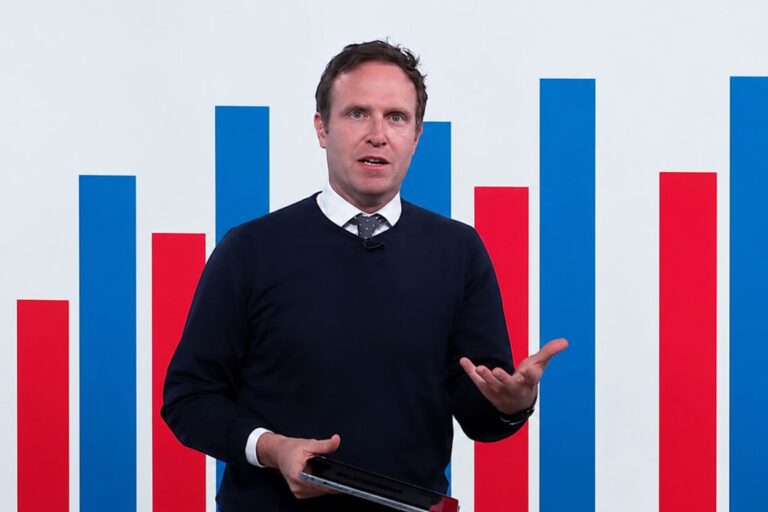
Global markets fluctuate constantly, but few individuals clarify economic chaos as effectively as Ed Conway. As a prominent broadcaster, he transforms dry data into captivating television stories. He currently occupies the prestigious role of Economics and Data Editor at Sky News. Beyond the television screen, he achieves immense success as a non-fiction author. His landmark book, Material World, altered how people view global supply chains. Consequently, audiences frequently seek details about his professional path, personal background, financial standing, and literary contributions. This detailed article explores every facet of his life, career, and enduring influence on modern financial journalism.
The Early Years and Elite Academic Foundation
Edmund Conway was born in 1979 in England. He grew up in an environment that valued intellectual curiosity and deep academic focus. For his secondary education, he attended The Oratory School in Oxfordshire. This Roman Catholic independent boarding school provided him with excellent foundational skills. Afterwards, he transitioned to higher education at Pembroke College, Oxford. He studied the English language and literature, which helped him develop a sharp, narrative-driven communication style.
However, his educational journey did not end in Oxford. He worked in the media industry for several years before seeking further expertise abroad. He won a prestigious Fulbright Scholarship, which allowed him to attend Harvard University. At the Harvard Kennedy School, he earned a Master’s in Public Administration. This specific academic program sharpened his understanding of public policy, global economics, and statecraft. Therefore, he possesses a rare mix of literary skill and analytical capability. This combination separates him from standard financial reporters in the modern media landscape.
Rising Through the Ranks of British Journalism
Breaking into Print Media
Before becoming a famous television personality, Conway built his reputation in the fast-paced world of print journalism. He initially sharpened his skills as an economics correspondent for the Daily Mail newspaper. This role required him to translate complex financial concepts for a broad national audience. For this reason, he learned to write with great clarity and speed.
His exceptional talent caught the attention of broadsheet newspapers. Consequently, he joined The Daily Telegraph and The Sunday Telegraph as their dedicated Economics Editor. During this period, he covered the initial tremors of the 2008 global financial crisis. He broke several major scoops that shook the banking sector. For example, he was the first journalist to reveal the Bank of England’s secret blueprints for quantitative easing. In addition, he warned the public about major funding gaps within the banking system before Northern Rock collapsed.
The Historic Move to Sky News
In August 2011, a major shift occurred in his professional trajectory. The management at Sky News recognized a growing need for deep financial analysis on live television. Therefore, they appointed him as their first-ever dedicated Economics Editor.
This historic appointment allowed him to reinvent how television news handles economic data. He did not simply read stock market numbers from a studio monitor. Instead, he traveled directly to the frontlines of financial crises. He covered the Eurozone debt crisis from Athens, analysed global trade disputes at G20 summits, and demystified complex government budgets. Eventually, the network expanded his title to Economics and Data Editor. This change reflected his innovative use of data journalism and complex digital charts on television.
Exploring the Masterpiece: Material World by Ed Conway
The Core Concept of the Book
While broadcasting kept him busy, Conway wished to explore the physical reality behind modern financial systems. This ambition resulted in his bestselling 2023 book, Material World: A Substantial Story of Our Past and Future. He realised that modern society takes advanced technology entirely for granted. However, everything around us relies on physical matter.
In the material world, Ed Conway identifies six foundational substances that built our civilisation: sand, salt, iron, copper, oil, and lithium. He argues that our digital lives depend heavily on these raw physical materials. To write Ed Conway material world, he travelled thousands of miles to visit deep mines, vast salt flats, and advanced microchip factories.
Critical Acclaim and Literary Impact
The impact of the material world, Ed Conway, was immediate and widespread. The book received spectacular reviews from global business leaders and environmental scientists. Because it seamlessly blends human history, chemistry, and macroeconomics, it reads like an adventure novel.
The book achieved immense critical success. For instance, the Financial Times shortlisted it for the Business Book of the Year Award. In addition, it earned a spot on the prestigious British Academy Book Prize shortlist. The text teaches readers that the green energy transition will require massive mining efforts. Therefore, humanity cannot easily escape its dependence on the Earth’s crust.
Understanding the Ed Conway Sky News Impact
On television, Conway maintains a highly engaging presentation style. The Ed Conway Sky News segments stand out because they use vivid visual metaphors. He frequently uses large virtual-reality graphs in the studio to explain inflation, the national debt, or trade imbalances.
Furthermore, he has interviewed some of the most powerful financial figures in modern history. His interview subjects include former IMF Managing Director Christine Lagarde and various Chancellors of the Exchequer. He also interviewed former Bank of England Governor Mark Carney. He consistently challenges powerful leaders by using undeniable economic data. Consequently, his segments provide viewers with genuine clarity rather than partisan political spin.
Heavy Industry Reporting and Emerging Warnings
Analysing the Industrial Collapse
Recently, his broadcasting work focused on a critical emergency facing the United Kingdom. Conway published a major investigation on Sky News regarding the structural decline of British manufacturing. He warned that the nation is rapidly losing the industries that create essential physical goods. Specifically, his deep-dive reports focused on basic chemical production facilities.
The Loss of Domestic Autonomy
His data showed that the UK has lost more than 90% of its core chemical production capacity over recent decades. He explained that items like pharmaceuticals, clothing, and fertilisers require basic chemical building blocks. Therefore, shuttering these factories compromises national resilience. In addition, it forces the country to rely almost entirely on foreign imports. To remedy this, his reports proposed utilising advanced technologies such as artificial intelligence to revitalise ageing facilities.
Exploring the Personal Life: Ed Conway Family and Wife
Keeping Private Matters Quiet
In an era where media personalities share everything online, Conway chooses a different path. He maintains a strict boundary between his public career and his private life. For this reason, verified facts about the Ed Conway family are difficult to find in public archives. He prefers that audiences focus entirely on his journalism, books, and analytical insights.
Insights Into His Marriage
Similarly, details regarding Ed Conway wife remain largely confidential. He occasionally mentions his domestic life during casual podcasts or book acknowledgements. For example, he noted that his wedding ring came from materials linked to global mining networks. However, he never names his spouse or children in public interviews. This discretion protects his loved ones from the intense scrutiny of the media industry. He lives quietly with his family in London, away from the glare of television cameras.
Evaluating the Numbers: Ed Conway Salary and Net Worth
The Reality of Media Contracts
Viewers often wonder about the financial compensation of top-tier broadcasters. Consequently, searches for Ed Conway salary occur frequently on search engines. Sky News operates as a private commercial entity under the Sky Group. Unlike the BBC, they are not legally required to publish the exact salaries of their top stars. Therefore, his official annual income remains completely undisclosed to the public.
Multiple Income Streams
Nevertheless, financial experts can make reasonable estimations based on market standards. High-profile editors at major UK networks generally earn between £150,000 and £300,000 annually. Furthermore, Conway possesses significant secondary income streams. He writes regular columns for The Times and The Sunday Times. In addition, his books sell thousands of copies internationally. These diverse factors ensure that he enjoys substantial financial stability.
Looking Forward to 2026 and Beyond
Launching the Next Literary Epic
As 2026 progresses, Conway is preparing to launch his highly anticipated next major project. He is finalising a new book titled Trade World: The Ties That Bound Our Past and Could Unravel Our Future. Penguin Books scheduled the official publication date for September 3, 2026. This landmark publication serves as the ultimate spiritual successor to his previous global bestseller.
The Mechanics of Trade World
The upcoming book focuses on how international commerce shapes human history. Conway analyses global networks through three everyday products: bread, cloth, and cars. He explores how ancient trade routes evolved into modern shipping lanes. Furthermore, he investigates how new geopolitical fractures, trade restrictions, and supply chain wars threaten modern prosperity. For this reason, his upcoming book will undoubtedly dominate economic best-seller lists.
Conclusion: The Enduring Legacy of a Modern Explainer
Ed Conway successfully redefines what it means to be a modern financial journalist. He bridges the gap between old-school print investigation and new-age digital data visualisation. From his early days at Oxford and Harvard to his current position at Sky News, he prioritises objectivity and clarity.
His books remind us that human society remains deeply tied to physical matter. At the same time, his television broadcasts help ordinary citizens understand confusing economic trends. He guards his family life carefully and keeps his financial data private, yet his professional transparency remains absolute. As the world navigates the economic uncertainties of 2026, audiences will continue to rely on his unique insights.
