

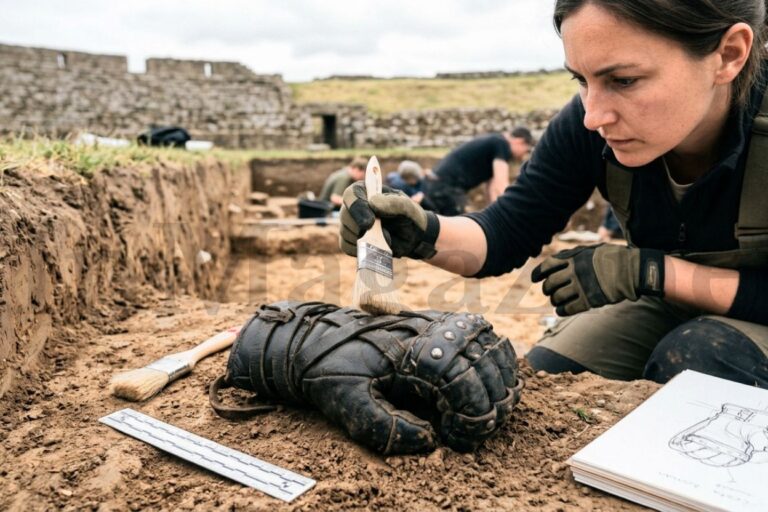
Ancient combat sports hold a unique place in the story of human endurance. One of the most legendary tools from this era is the cesta roman. This specialized boxing gear was used by fighters across the Roman Empire to deliver crushing blows. While modern sports focus on athlete safety, the ancient world prioritized raw spectacle and power. In this guide, we will explore the history, construction, and modern legacy of the cesta roman as of 2026.
The Origins of the Cesta Roman in Combat
The term cesta roman (often called the caestus) stems from the Latin word “caedere,” which means to strike or kill. It began as a simple development of the Greek “himantes,” which were soft leather wraps. However, the Romans wanted something much more impactful for their public games. They transitioned from protective wraps to offensive weapons that could end a match with a single strike.
In the early Republic, boxing was a way for soldiers to stay fit. As the Empire grew, boxing became a professional sport for the “arenarii” or arena performers. These fighters used the cesta roman to show off their strength to thousands of spectators. It is fascinating to see how a simple leather strap evolved into a complex piece of military-grade sporting equipment.
Archaeological Breakthroughs and Real-World Finds
For centuries, historians only knew about the cesta roman through ancient literature and art. However, a major breakthrough occurred at the Roman fort of Vindolanda. Archaeologists found rare, preserved leather gloves that date back to approximately A.D. 120. These are currently considered the only surviving physical examples of such gear in the world.
These finds show that the cesta roman was not a “one-size-fits-all” tool. One glove was found to be padded with coils of leather, likely for sparring or practice. The other was larger and filled with heavier organic material to protect the knuckles during a real fight. This discovery proves that Roman athletes had a sophisticated understanding of training versus competition.
Engineering the Lethal Cesta Roman
The technical design of a cesta roman was incredibly advanced for its time. Makers used thick ox-hide that was treated to withstand heavy moisture and sweat. The straps often extended up to the elbow to provide forearm protection. This allowed the fighter to use their arms to block incoming attacks without breaking bones.
As the sport became more brutal, creators added “myrmex” or “limb-piercers.” These were metal studs or lead plates sewn directly into the leather over the knuckles. Because of this added weight, the cesta roman was not meant for fast, light tapping. Instead, it favored a heavy, swinging style of boxing that required immense physical power.
Differences Between Greek and Roman Styles
It is important to distinguish the cesta roman from its Greek predecessors. Greek boxing focused on agility and lasted for long periods. The Romans, however, preferred shorter and more violent contests. They changed the design of the gloves to ensure that matches ended decisively.
The Roman version often included a “hand-guard” made of hardened leather. This gave the cesta roman a rigid structure similar to a modern knuckle duster. While the Greeks saw boxing as an art, the Romans viewed it as a test of ultimate durability. This cultural shift is reflected perfectly in the evolution of their combat gear.
The Cultural Significance of Boxing in Rome
In Roman society, the cesta roman was a symbol of “virtus,” or manly courage. Watching a boxer step into the ring with these heavy weapons was a lesson in bravery for the citizens. It showed that a Roman was willing to face extreme danger for the sake of glory. This mindset was the backbone of the Roman military machine.
Furthermore, matches were often held during religious festivals or to celebrate military victories. The cesta roman appeared in the poems of Virgil and the satires of Juvenal. It was a common part of the cultural landscape, much like football is today. Even the emperors, such as Augustus, were known to be massive fans of these intense boxing matches.
Modern Recreations and Historical Martial Arts
In 2026, there is a growing community dedicated to Historical European Martial Arts (HEMA). Many of these enthusiasts study the cesta roman to understand ancient fighting stances. By building accurate replicas, they can feel the physical weight and limitations of the gear. This helps modern researchers understand why Roman boxers stood the way they did in ancient statues.
Modern replicas are usually made from vegetable-tanned leather to match the original feel. However, for safety reasons, modern versions omit the lead and iron spikes. Using a cesta roman replica in training provides a unique forearm workout that is hard to replicate with modern gym equipment. It remains a popular topic for those interested in functional fitness and history.
The Role of Cesta Roman in Modern Media
We see the influence of the cesta roman in many movies and video games in 2026. Digital artists use historical records to create realistic armor and weapons for ancient-world simulations. This has introduced the cesta roman to a much wider audience than ever before. It often serves as a “power-up” or a special weapon for gladiator characters.
These media portrayals have sparked a renewed interest in the lives of the athletes who wore them. People are curious about the diets, training routines, and medical care of ancient boxers. The cesta roman acts as a gateway for people to explore the deeper aspects of Roman history. It is more than a weapon; it is a piece of human heritage.
Forensic Analysis of Ancient Injuries
Modern forensic science has analyzed the bones of ancient fighters found in gladiator cemeteries. Many of these skeletons show unique fracture patterns on the skull and jaw. Researchers believe these injuries were caused by the heavy impact of the cesta roman. This data provides a grim but accurate look at the reality of ancient combat.
The impact force of a weighted object was likely enough to crack a helmet. This explains why Roman boxers focused so much on head movement and defensive posture. By combining archaeology with forensic science, we can reconstruct the intensity of a match from 2,000 years ago. It is a powerful example of how history and science work together in 2026.
Why the Cesta Roman Remains Relevant Today
You might ask why the cesta roman still captures our imagination in the modern age. The answer is that it represents the roots of modern combat sports. Every time we watch a boxing match today, we are seeing a safer version of what the Romans started. The cesta roman reminds us of how far we have come in terms of sportsmanship and safety.
Additionally, the craftsmanship of the cesta roman is a testament to Roman ingenuity. They were able to create durable, effective gear using only natural materials and basic metals. In a world of mass-produced plastic, the “human touch” of ancient leatherwork is very appealing. It inspires modern designers to look back at traditional methods for inspiration.
How to Study the Cesta Roman in 2026
If you want to learn more about the cesta roman, there are several great resources available. Many museums have updated their digital galleries to include 3D scans of Roman artifacts. You can rotate and zoom in on high-resolution images of the Vindolanda gloves from your own home. This level of access is a major benefit of living in 2026.
You can also find detailed papers from the Roman Society and other academic groups. These documents dive deep into the tanning techniques and leather types used in the Empire. For those who prefer a hands-on approach, leatherworking workshops often offer courses on ancient binding. This is a subject that offers something for everyone, regardless of their background.
The Future of Archaeological Research
As technology improves, we are finding more sites using ground-penetrating radar. This means we might find even more examples of the cesta roman in the coming years. Every new find helps us refine our understanding of the ancient world. The story of the cesta roman is still being written as we uncover more of our past.
We are also seeing the use of AI to translate ancient texts more quickly. This could lead to the discovery of lost training manuals or personal accounts from boxers. Imagine reading the direct thoughts of a man who fought with a cesta roman in the Colosseum. The possibilities for future discovery are truly endless.
Final Summary of the Cesta Roman Legacy
The cesta roman stands as a powerful icon of the Roman Empire’s strength and brutality. It evolved from a simple wrap into a sophisticated weapon that defined an era of sport. Through the hard work of archaeologists and historians, we can still appreciate its design today. It serves as a bridge between the ancient world and our modern passion for competition.
In conclusion, exploring the cesta roman is a journey into the heart of Roman culture. It teaches us about their values, their technology, and their daily lives. Whether you are interested in martial arts, history, or engineering, the cesta roman has a story to tell. Keep an eye on the news for the latest discoveries, as the ancient world always has more secrets to share.
