

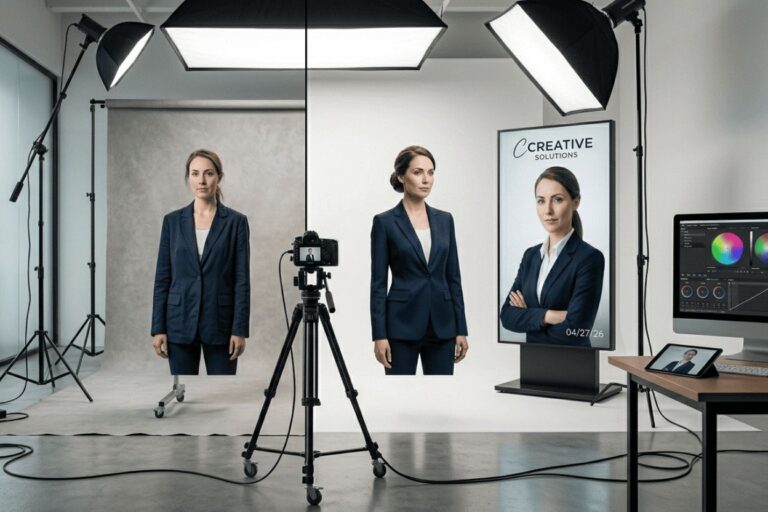
Creating visuals for branding is not just about generating something that looks good. It’s about creating something that feels consistent, intentional, and ready to represent a business across different platforms. That’s where many image tools start to feel limited.
Some produce impressive visuals but require extra work before they can be used. Others fit more naturally into real workflows were speed and consistency matter just as much as creativity.
When comparing Higgsfield AI and Adobe Firefly, the real question is simple: which one helps you move from idea to usable brand content with less friction?
Branding needs more than just aesthetics
A brand is built over time through repetition and consistency. Every visual contributes to how people recognize and remember it.
That means every image used in marketing needs to:
- Follow a consistent visual direction
- Align with messaging
- Work across different formats
- Feel connected to previous content
Even small inconsistencies can weaken brand identity. So the tool you use should help maintain that consistency without adding extra effort. A strong ai image generator should support this without making the process complicated.
A closer look at how Higgsfield AI approaches output
Tools like Higgsfield AI are built with this kind of workflow in mind. Instead of focusing only on visual generation, they focus on how that visual will actually be used.
With an ai image generator, the process feels more direct. You generate something that already fits closer to your final goal rather than something that needs multiple fixes.
That’s where Brand output becomes easier to achieve. This ai image generator is designed to reduce the gap between idea and execution, which makes a noticeable difference when working on real campaigns.
Adobe Firefly and its design-first mindset
Adobe Firefly comes from a design background, and that shows in how it works.
It integrates smoothly with tools like Photoshop and Illustrator, which gives designers a familiar environment to refine visuals. This makes Firefly a powerful ai image generator for users who prefer a design-led workflow.
However, it often assumes that refinement will happen after generation, which adds extra steps for teams focused on speed.
Where the two tools feel different in practice
The difference becomes clearer when you look at how each tool fits into daily work. With a workflow-focused ai image generator, you move from idea to usable visual faster.
With a design-integrated ai image generator, you often move from idea to draft, and then refine it further. Neither approach is wrong. They just serve different needs.
For teams working on fast-moving campaigns, reducing steps can make a noticeable difference in productivity.
Handling real campaign requirements
Brand visuals are rarely standalone. They are part of a larger system.
A campaign might require:
- Multiple formats
- Slight variations
- Consistent styling
- Quick updates
This is where workflow efficiency matters.
Higgsfield AI allows teams to generate outputs that already feel aligned, making it a practical ai image generator for campaigns. Adobe Firefly allows deeper refinement, but that refinement takes time. The difference shows up when deadlines are tight.
Working with text and structured visuals
Brand content often includes structured layouts with text elements.
Things like:
- Headlines
- Promotional copy
- Product details
These elements need to be clear and usable.
A reliable ai image generator should handle these elements without requiring heavy manual correction. Higgsfield AI focuses more on ready-to-use output, while Adobe Firefly gives flexibility but often requires editing inside design tools. That extra step becomes noticeable when producing content regularly.
Creating consistency without extra effort
Consistency is not just about repeating the same design. It’s about maintaining a recognizable style across variations.
Higgsfield AI helps achieve this by allowing users to generate visuals within a consistent direction using the same ai image generator workflow. Adobe Firefly supports consistency through manual control, which can be powerful but requires more hands-on effort. For teams producing content at scale, this difference matters.
Speed vs control: a practical trade-off
At some point, the comparison comes down to a trade-off.
- Faster output with fewer steps
- More control with additional refinement
Higgsfield AI leans toward speed and usability, making it a strong ai image generator for marketing teams.
Adobe Firefly leans toward control and flexibility, which suits designers who prefer detailed adjustments. The right choice depends on how your team works.
Scaling brand visuals over time
As content demands grow, the ability to scale becomes important. Creating more visuals should not mean increasing complexity.
Higgsfield AI supports scaling by simplifying production within one ai image generator workflow. Adobe Firefly supports scaling through structured design systems.
Teams often explore brand management systems to maintain consistency, and the choice of tool affects how easily that happens.
Long-term workflow impact
The real difference between tools becomes more visible over time. A tool that requires fewer steps will save hours across multiple campaigns. A tool that requires refinement may offer more control but increases time investment.
An ai image generator that fits smoothly into your workflow can significantly improve efficiency without affecting quality. This is where workflow design becomes just as important as output quality.
Which one fits better for your workflow
If your workflow is fast-paced and content-heavy, a tool that reduces steps will feel more efficient.
If your workflow is design-focused and detail-oriented, a tool that integrates into design software will feel more natural. That’s the real difference. Choosing the right ai image generator depends on whether you prioritize speed or control.
Final thoughts
Higgsfield AI and Adobe Firefly are both strong in their own way, but they are built with different priorities. One focuses on making content ready faster. The other focuses on giving designers more control. Brand output is not just about how visuals look. It’s about how easily they can be created, adjusted, and reused. An effective ai image generator should reduce friction, not add to it.
If your goal is fast, consistent, and usable content, Higgsfield AI offers a more streamlined approach. If your goal is detailed refinement within a design environment, Adobe Firefly remains a strong option. In the end, the best choice is the one that fits how your team actually works day to day.
