

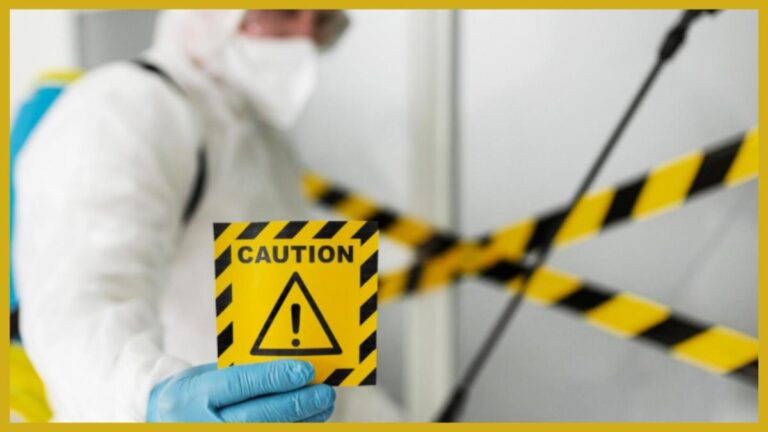
Lack of safety measures in the workplace often lead to one unresolved issue – the question of who is responsible for spotting and judging the hazards? If everybody thinks that safety assessments are handled by others, then the gaps in safety measures will be so dangerous that the workers will be at risk.
Knowing who is responsible for hazard assessments is not only a matter of paying attention to regulations. It is about putting into place clear accountability principles that will force the identification, evaluation and control of hazards before they do any harm. The solution requires the cooperation of different parties through a structured framework.
Understanding the Foundation – What HIRA Full Form Means
It is vital to gain a proper understanding of the responsibilities involved before getting on to them. Flexible Responsibility has the HIRA meaning of Hazard Identification and Risk Assessment. It is a systematic method that is used in different industries for the proactive management of safety in the workplace.
HIRA reveals more than a mere abbreviation – it is a complete method that splits the area of workplace safety into two interconnected stages. The first phase is hazard identification, which requires the systematic checking of the entire operations to find any harmful sources. The other phase is risk assessment, which decides the extent and severity of the injuries that an identified hazard could cause.
This organized approach has changed the nature of the safety in an organization from being reactive to proactive and it also transformed the nature of safety management. The HIRA method does not wait for accidents to spot safety issues, rather firms that adopt it assume a position of actively looking for safety hazards and controlling or eliminating them ahead of time.
Apart from making the concept of the HIRA framework clearer, this point also highlights the fact that the responsibility of hazard assessment cannot be assigned to one individual or one department. The HIRA method is very intensive and requires the commitment, the know-how and the effort of the whole organization.
The Critical Role of Safety Professionals
The ultimate accountability is with the employers; however, the safety professionals often take over the whole HIRA process and conduct hazard assessments on a daily basis as their responsibility.
Safety professionals like the safety managers, occupational health specialists and industrial hygienists all work together and contribute their specialized knowledge for the hazard identification.
The various experts in the mentioned fields who are doing the hazard assessments have a very good understanding of the assessment methodologies, can easily tell different types of hazards and are experienced in risk evaluation systematically. Their “know-how” guarantees that the assessments are not only thorough but also consistent and abiding by the law.
It is usual for these specialists to be the ones who organize the whole assessment process within the company. They are the ones who come up with the whole assessment schedule and also train other departments in the process of identifying hazards, hold the risk evaluation sessions and keep the records. Not only that, they also maintain their knowledge on risks that are building up and new laws and regulations and that (the industry) best practices are developing, which should be considered while doing the assessments.
Nonetheless, good safety professionals realize that they will not be able to discover all hazards by themselves. People who are intimately involved with the equipment and processes are the ones whose input is needed. The safety teams of the organization are the smart ones that come up with the collaborative assessment processes that gain the expertise throughout the organization.
When Specialized Expertise Becomes Necessary
Some risks need specialized skills that even general safety experts or operational staff do not have. Therefore, in these cases, companies must hire experts who have thorough knowledge of the specific area involved.
Industrial hygienists work is to evaluate risks that are the result of chemicals, living organisms and physical forces. They take the air quality tests, measure the noise levels and carry out exposure assessments that categorize the hazards which cannot be observed by the naked eye.
Ergonomists analyze the placement of workstations, the dangers of repetitive movements and the risk of developing musculoskeletal disorders. The methods of assessment particular to ergonomists detect the hazards of cumulative trauma that take a long time to develop rather than causing immediate injury.
Engineers might have to investigate the integrity of buildings, the safety of electrical systems and the implications of mechanical equipment on health. Their expertise guarantees precise evaluation of intricate systems that, if not very well understood, could fall catastrophically.
Health care professionals or clinical psychologists may evaluate work-related mental health problems, stress sources or conditions related to employee’s mental health. These evaluations necessitate medical skills , which are typically not provided in safety training.
However, being able to know when to bring in specialists is itself a very important skill. Safety professionals should be aware of the areas where their expertise ends and thus involve specialists when assessment of the knowledge they lack is required.
Shared Responsibility Through Joint Health and Safety Committees
In the majority of the workplaces, joint health and safety committees are established to share the responsibility for assessing hazards formally. The committees usually consist of management and worker representatives who cooperate to solve safety-related issues.
Safety committees often coordinate hazard assessment activities across the organization. They might establish assessment schedules, review assessment findings, prioritize control measures and monitor implementation progress. This structure ensures multiple perspectives inform safety decisions.
Committees also serve as communication channels between management and workers on safety matters. Workers can raise hazard concerns through their committee representatives, ensuring issues reach decision-makers. Management communicates safety initiatives and assessment findings back to the workforce through these same channels.
Effective committees operate with genuine authority to influence safety decisions. When committees can only make recommendations that management routinely ignores, participation becomes tokenism rather than meaningful collaboration. Real shared responsibility requires committees that can drive action.
Practical Steps for Clarifying Responsibility
Organizations serious about hazard assessment responsibility should document clear accountability structures. Safety policies should specify who conducts assessments, how often they occur, what triggers additional assessments and how findings are communicated and acted upon.
Job descriptions should include safety responsibilities appropriate to each role. Supervisors should see hazard identification listed among their core duties. Workers should understand their responsibility to report hazards. Safety professionals should have clear accountability for coordinating assessment processes.
Performance evaluation systems should incorporate safety responsibilities. When performance reviews assess how well people fulfill their safety obligations, accountability becomes real rather than theoretical.
Resource allocation must match assigned responsibilities. If supervisors are responsible for departmental assessments but receive no training, time or tools to conduct them, you’ve created responsibility without capability. Support must follow accountability.
Regular audits should verify that assessments are happening as required and involving appropriate parties. These audits catch gaps in responsibility fulfillment before they result in incidents.
Making HIRA Work Through Collective Responsibility
The question “who is responsible for conducting a hazard assessment?” doesn’t have a single answer because effective hazard management requires multiple stakeholders working together.
Employers provide resources and accountability structures. Safety professionals bring expertise and coordination. Supervisors apply knowledge of specific operations. Workers contribute frontline intelligence. Specialists offer technical depth. Together, these roles create comprehensive hazard identification and risk assessment.
The HIRA framework succeeds when organizations move beyond checking compliance boxes to genuinely embracing shared responsibility for worker safety. When everyone understands their role in identifying hazards and managing risks, workplaces become safer for all.
READ ALSO: Lucy Alexander: TV Presenter Family Net Worth And Career Now
