

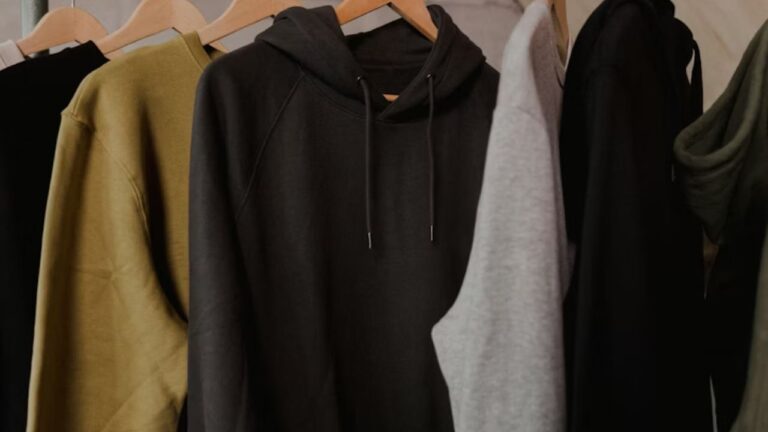
Few garments have made the journey from workwear to wardrobe essential quite as decisively as the hoodie. What began as purely functional outerwear, designed for athletes and outdoor labourers who needed warmth without restriction, has become one of the most commercially significant and culturally versatile pieces in contemporary fashion. It sits comfortably across categories, price points, and demographics, and shows no sign of retreating. The plain hoodie in particular, unencumbered by logos or graphics, has established itself as the backbone of countless clothing ranges, both at street level and at the premium end.
For brands and retailers looking to build around this piece, sourcing matters enormously. The difference between a heavyweight, well-constructed blank hoodie and a thinner, less considered alternative is immediately legible to anyone who handles both. Working with an experienced plain hoodies supplier means access to garments that hold their shape across washes, carry prints or embroidery cleanly, and communicate quality before a single stitch of decoration is added.
Why the Hoodie Has Outlasted Every Trend Cycle
The hoodie’s longevity in fashion is not accidental. It solves a problem that most garments only partially address: it is genuinely comfortable, genuinely warm, and genuinely adaptable across occasions. A well-made hoodie worn over a shirt reads as smart casual. The same piece worn with joggers reads as leisure. Layered under a coat, it disappears into an outfit as insulation. This multi-context utility is rare in clothing and accounts for why the hoodie has retained its commercial relevance even as individual styling trends have shifted considerably around it.
Trend forecasters are in agreement on this point. FashionUnited’s coverage of WGSN’s key items for the autumn/winter 2026/27 menswear season lists hoodies explicitly among the key pieces for the coming season, noting that oversized and retro styles with collegiate detailing are particularly strong. The garment is not merely surviving in forecasts: it is being actively positioned as a core seasonal item by the industry’s leading trend analysts.
Plain Versus Printed and Why Plain Often Wins
There is a persistent assumption in fashion retail that printed or branded hoodies are inherently more desirable than plain ones. The commercial data tells a different story. Plain hoodies in quality fabrics consistently outperform heavily branded equivalents in long-term sales velocity, for the simple reason that they are not anchored to a specific moment, aesthetic, or trend. A graphic hoodie carrying a reference to a particular cultural moment may sell strongly in a short window and then slow sharply as that reference dates. A plain heavyweight hoodie in a neutral or muted colourway continues to move across seasons.
This is one of the reasons why independent brands who have built a strong core product around a blank hoodie tend to show more stable revenue patterns than those who rely heavily on trend-driven graphics. The blank piece also gives the customer more stylistic agency: it works with more of what they already own, which reduces the psychological barrier to purchase. A hoodie that asks nothing of the rest of your wardrobe is far easier to buy than one that demands an entire look to support it.
Fabric Weight and Construction as the Real Differentiators
In the plain hoodie category, the factors that separate a product customers return to from one they wear once and set aside are almost entirely in the fabric and construction. GSM, which stands for grams per square metre, is the most immediate indicator of fabric weight. A 280GSM or higher hoodie has a substantiality in the hand that communicates quality before the garment is even worn. It hangs better, retains its shape through repeated washing, and carries printed or embroidered decoration with significantly more precision than a lighter-weight alternative.
Construction details compound the effect. Reinforced seams at the shoulders and armholes, a double-lined hood that holds its shape rather than collapsing flat, a kangaroo pocket with clean internal finishing, and a ribbed hem that recovers its form after stretching: these are the details that most consumers cannot name but immediately register. They are also the details that make the difference between a hoodie that is replaced after one season and one that becomes a customer’s go-to piece for three years.
Colourways and the Commercial Logic of Restraint
Colour selection in the plain hoodie category follows a different logic to most other garment types. The temptation when building a range is to offer as many colours as possible, reasoning that broader availability equals broader appeal. In practice, the opposite is often true. A well-curated selection of eight to twelve colourways, anchored by neutral whites, blacks, and greys and extended with a small number of muted earth tones or seasonal additions, generates more coherent stock management and stronger sell-through than a fifty-colour range where many options move very slowly.
The neutrals will always carry the commercial weight of a plain hoodie range. Off-white, stone, charcoal, and navy are the colours that customers return to repeatedly because they work with the widest variety of other garments. Introducing a small number of seasonal accent colours, a dusty terracotta for autumn, a pale sage for spring, keeps the range feeling current without the operational complexity of managing dozens of slow-moving options.
The plain hoodie occupies a position in contemporary fashion that very few garments achieve: it is simultaneously a blank canvas and a finished product. It can be sold as-is to customers who want exactly what it is, or it can serve as the starting point for a brand’s entire visual identity. Either way, the quality of the base garment determines how far it can take a business. Getting that foundation right, from fabric weight and construction through to colourway selection and supplier reliability, is the work that makes everything else possible.
