

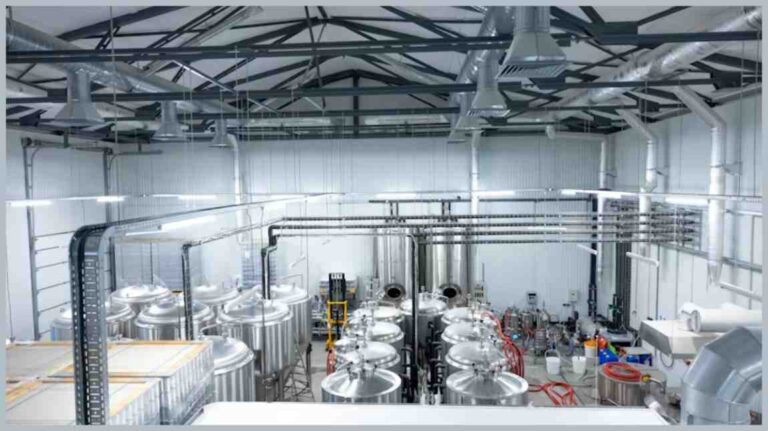
Investing in brewery equipment is one of the most significant financial commitments a business owner in the craft beverage industry will ever make. Whether you are launching a startup nano-brewery or scaling up a regional production facility, the question of “how long will this last?” is essential for measuring your return on investment (ROI).
The short answer is that high-quality stainless steel brewery equipment can last between 20 and 30 years, while moving parts and electronic components typically have a shorter lifespan of 5 to 15 years. However, the “real” lifespan of your equipment isn’t just a number on a spec sheet; it is a variable determined by material quality, maintenance rigor, and operational habits.
The Anatomy of Longevity: Breaking Down Components
Not every piece of equipment in your facility will age at the same rate. A brewery is a complex ecosystem of static vessels, mechanical pumps, and sensitive electronics. To understand the total lifespan, we must look at the individual parts.
Stainless Steel Vessels (20–30+ Years)
The backbone of any brewery is its tanks: the Mash Tun, Lauter Tun, Brew Kettle, Whirlpool, and Fermentation Vessels. These are primarily static components. Because they do not have many moving parts, their primary enemy is corrosion—specifically “pitting” or “rusting” caused by harsh chemicals or poor-quality steel.
Top-tier vessels made from 304 or 316L stainless steel are incredibly resilient. With proper passivation (a chemical process that restores the protective oxide layer on the steel), these tanks can easily surpass the 30-year mark. In many European breweries, it is not uncommon to see stainless steel vessels from the 1970s still in daily operation.
Mechanical Equipment (7–15 Years)
Equipment with motors and moving parts, such as grain mills, pumps, and centrifuges, works much harder than a stationary tank.
- Pumps: Centrifugal pumps are the workhorses of the brewhouse. Depending on the quality of the seals and the frequency of “dry running” (running the pump without liquid, which causes immediate damage), a high-quality pump will last about 10 years before requiring a motor replacement or significant rebuild.
- Grain Mills: These are subject to immense physical friction. While the housing might last decades, the rollers will eventually dull. Most commercial mills allow for roller gap adjustment and resurfacing, but after 12 to 15 years of heavy use, the mechanical tolerances may slip.
Cooling Systems and Glycol Chillers (10–20 Years)
The glycol chiller is the “heart” of your cellar’s temperature control. These systems contain compressors, fans, and heat exchangers. A well-maintained chiller in a clean, ventilated environment can last 20 years. However, if the chiller is placed in a dusty area or is undersized (causing it to “short cycle” or run constantly), the compressor may fail within 8 to 10 years.
Control Systems and Electronics (5–12 Years)
Technology moves faster than metallurgy. While your stainless steel tank won’t be “obsolete” in a decade, your PLC (Programmable Logic Controller) or touch-screen interface might be. Electronic components are also susceptible to the high-humidity, wet environment of a brewery. You should budget for electrical upgrades or component replacements every decade.
Factors That Determine Equipment Lifespan
Why does one brewery’s equipment look brand new after ten years while another’s looks ready for the scrap yard? It typically comes down to three main factors that set them apart.
1. Material Selection
The lowest-priced choice often ends up costing more over time. Professional brewery equipment should be constructed from food-grade 304 stainless steel at a minimum.
- Thickness: Cheaper tanks often use thinner steel walls. While they hold liquid just fine, they are more prone to denting and, more importantly, are less stable under the thermal stress of repeated heating and cooling cycles.
- Weld Quality: This is the most common failure point. Hand-welded seams must be ground smooth and passivated. Any tiny crevice left in a weld is a “harbor” for bacteria and a starting point for corrosion.
2. The Chemistry of Cleaning
Brewing is 90% cleaning. However, the very chemicals used to keep equipment sanitary—caustic soda and acid cleaners—can also destroy it.
- Caustic Stress: High concentrations of caustic at extreme temperatures can eventually “stress” the steel.
- Chlorine Warning: Never use cleaners containing chlorine on stainless steel. Chlorine causes rapid pitting and can ruin a $20,000 fermenter in a matter of months.
3. Operational Load
A brewery designed to brew once a week that is suddenly pushed to brew three times a day will see its equipment lifespan compressed. High-frequency use means more thermal expansion and contraction, more pump cycles, and more frequent valve operations. If you plan to scale, it is better to buy larger equipment that runs less often than small equipment that runs 24/7.
Maintenance: The Key to Extending Equipment Life
If you want your equipment to reach the 30-year mark, you must move from “reactive maintenance” (fixing things when they break) to “preventive maintenance” (servicing things so they don’t break).
The Daily Routine
- Rinse immediately: Never let wort or beer dry inside a vessel. Dried sugars become “beer stone” (calcium oxalate), which requires aggressive scrubbing that can scratch the steel.
- Visual inspections: Check for leaks at every tri-clamp connection and valve seat. Small leaks are often symptoms of a failing gasket that could cause a major batch loss later.
The Quarterly/Annual Deep Dive
- Gasket Replacement: Rubber gaskets and O-rings are “sacrificial” parts. They are designed to wear out so your steel doesn’t. Replace all EPDM or Silicone gaskets at least once a year.
- Motor Lubrication: Ensure all pump and mill motors are greased according to manufacturer specifications.
- Passivation: Once a year, perform a dedicated passivation cycle (using a nitric or citric acid blend) to reinforce the protective chromium-oxide layer on your stainless steel surfaces.
When Is It Time to Replace?
There comes a point where the cost of repair exceeds the value of the equipment. Look for these “red flags”:
- Persistent Contamination: If you are seeing “off-flavors” in your beer despite a perfect CIP (Clean-In-Place) regimen, you may have “pitting” inside your tanks—microscopic holes where bacteria hide. Once steel is pitted, it is nearly impossible to sanitize reliably.
- Structural Fatigue: Significant bulging in jacketed tanks or cracks near weld points indicates that the metal has reached its fatigue limit.
- Inefficiency: If your boiler takes twice as long to reach a boil or your chiller can no longer hold fermentation temperatures, the internal scale buildup or component wear may be making the machine a “money pit” in terms of energy costs.
Why Choose Micet Brewery Equipment?
When it comes to longevity, Micet Group is a world-class leader in manufacturing. Micet’s equipment is engineered specifically to withstand the rigors of high-volume commercial brewing while maintaining the aesthetic finish of a showpiece taproom.
Why Micet stands out:
- Superior Materials: Micet uses only certified 304 or 316L stainless steel, ensuring your vessels are built for a 25-to-30-year lifespan.
- Precision Welding: Using advanced TIG welding and automated polishing, Micet ensures that there are “zero dead corners,” reducing the risk of contamination and corrosion.
- Custom Engineering: Every system is tailored to the brewer’s specific needs, meaning your equipment is “right-sized” for your production goals, preventing the “overwork” that leads to premature failure.
- Global Support: With a robust warranty and a ready supply of replacement parts, Micet ensures that if a mechanical component does reach its end-of-life, your downtime is kept to an absolute minimum.
Investing in Micet is not just buying hardware; it is securing the future of your brewery with equipment designed to last for generations.
Frequently Asked Questions
1. Is used brewery equipment a good investment? Used equipment can save you 30% to 50% on upfront costs, but it comes with risks. You must inspect used tanks for pitting, scratches, and “beer stone” buildup. If the previous owner neglected maintenance or used chlorinated cleaners, the equipment may have a very short remaining lifespan. Always factor in the cost of replacing all gaskets and potentially refurbishing pumps when buying used.
2. How often should I passivate my stainless steel tanks? New equipment should be passivated immediately before the first brew. After that, most professionals recommend a passivation cycle once or twice a year, or whenever the steel has been mechanically scrubbed or exposed to oxygen for a long period. This keeps the “skin” of the steel tough against corrosion.
3. Does the “hardness” of my water affect equipment life? Yes, significantly. Hard water leads to scale buildup (calcium and magnesium deposits) in your heat exchangers, cooling jackets, and boilers. This scale acts as an insulator, making your equipment work harder and hotter to achieve the same results, which shortens the lifespan of heating elements and compressors. A high-quality water filtration or softening system is an investment in the longevity of your entire brewery.
READ ALSO: Career Opportunities After Learning Managing Successful Programmes
