

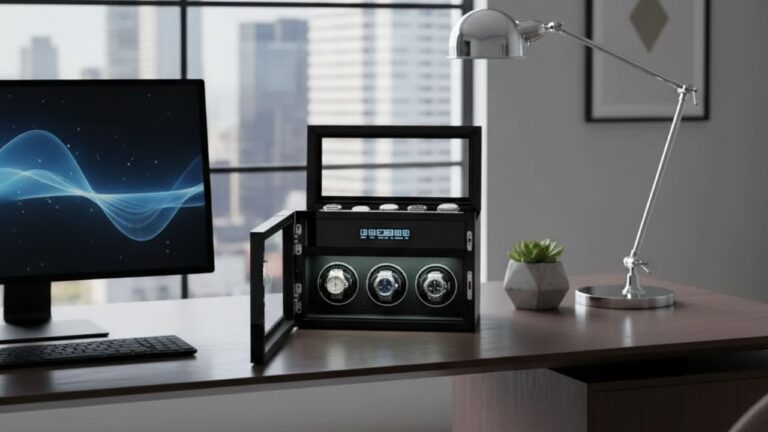
For any serious watch collector, an automatic timepiece is more than just a tool for telling time; it is a masterpiece of engineering, history, and personal style. However, the very mechanism that makes these watches remarkable—the self-winding rotor—presents a unique challenge: if the watch isn’t worn, it stops.
This is where the importance of a high-quality maintenance solution comes into play. A premium watch winder is not merely a luxury accessory; it is a vital piece of equipment designed to keep your collection in peak chronometric condition. In this guide, we will explore why investing in professional-grade winding technology is essential for the modern enthusiast and how to choose a model that complements your lifestyle and your timepieces.
What is a Premium Watch Winder and Why Does it Matter?
At its core, a watch winder is a device equipped with a motor and a rotating holder designed to mimic the natural motion of a human wrist. For owners of automatic watches, this serves a dual purpose. Practically, it ensures that your watch is always ready to wear, with the time and complications (such as perpetual calendars or moon phases) perfectly set.
Beyond convenience, the mechanical benefit is significant. The internal movements of a luxury watch are lubricated with specialized oils. If a watch remains stationary for extended periods, these oils can begin to settle or congeal, leading to increased friction and potential long-term damage once the watch is eventually restarted. By utilizing a high-quality automatic watch rotator, you ensure that the movement remains active and the lubricants stay evenly distributed, effectively extending the service life of your investment.
Key Features and Benefits of Professional Winding Systems
When moving beyond entry-level plastic alternatives, premium winding systems offer a suite of features designed to protect the delicate internals of high-end Swiss and Japanese movements.
Precision TPD (Turns Per Day) Settings
Not all watches require the same amount of energy to stay wound. A heavy-duty diver might need 900 TPD, while a slim dress watch might only need 650. Premium models allow you to customize these settings, preventing the “overwinding” stress that can occur in cheaper, non-programmable units.
Directional Control
Modern movements can be “uni-directional” (winding only when turned clockwise or counter-clockwise) or “bi-directional.” A professional winder offers settings for clockwise, counter-clockwise, and bi-directional rotation to match the specific caliber of your watch.
Silent Motor Technology
A common complaint with budget winders is the mechanical “whirring” noise. Premium collections prioritize brushless, shielded motors that operate in near-total silence, making them suitable for placement on a bedside table or in a quiet study.
Shielding Against Magnetism
Mechanical watches are highly sensitive to magnetic fields, which can cause them to run fast or stop altogether. Top-tier winders feature motors that are physically shielded to ensure no magnetic interference reaches the watch movement during operation.
Who Should Invest in a Premium Winding Solution?
While any automatic watch owner can benefit from a winder, certain collectors will find them indispensable:
- The Multi-Watch Collector: If you rotate between three or four different pieces throughout the week, a multi-watch winding station saves you the five-minute ritual of resetting each watch every morning.
- The Complication Enthusiast: If you own a perpetual calendar or a grand complication, resetting the date, month, and year after the power reserve runs out can be an arduous task. A winder keeps these complications perfectly synchronized.
- The Luxury Investor: For those who view watches as an asset class, maintaining the mechanical integrity of the movement is paramount for retaining resale value.
- The Interior Design Conscious: A premium winder doubles as a display case. Crafted from fine woods, leathers, and glass, they turn a hidden collection into a center-piece of home decor.
How to Choose the Right Option From This Collection
Selecting the perfect unit requires balancing your current collection size with your future goals. Consider the following roadmap:
- Capacity Planning: Always buy for the collection you want, not just the one you have. If you currently own two watches, a four-piece winder provides room for growth.
- Cuff Size Matters: Ensure the watch holders (cuffs) are adjustable. Premium winders often use “lock-in” cuffs with telescopic springs to accommodate both small wrists and oversized sports watches without putting pressure on the strap or bracelet.
- Power Sources: If you plan to keep your watches in a safe or a wardrobe, look for models that offer battery power options. For desk or sideboard display, a DC power adapter is usually the more convenient choice.
- Security Features: Some high-end models feature lockable glass doors, providing an extra layer of protection against dust and curious hands.
Why a Professional Winder is a Smart Long-Term Investment
It is often said that the most expensive way to own a luxury watch is to neglect it. The cost of a full mechanical service for a luxury brand can often exceed the price of a high-end winder. By keeping the movement in a steady state of operation, you reduce the frequency of “dry starts” and mechanical wear.
Furthermore, the aesthetic value cannot be overstated. A luxury watch storage and winding unit provides a dedicated, dust-free environment. Exposure to dust and humidity can degrade gaskets and dials over time; a sealed winding case acts as a first line of defense, preserving the “mint” condition of your timepieces for decades.
Conclusion
A luxury watch is a testament to craftsmanship, and it deserves a maintenance routine that reflects that quality. By choosing a premium watch winding solution, you aren’t just buying a convenience—you are investing in the health and longevity of your collection.
Whether you are a seasoned collector with a dozen rare pieces or a new enthusiast with your first high-end automatic, the right winder ensures that your watches are always ready for the next occasion, perfectly timed and beautifully displayed. Explore the collection today and give your timepieces the home they deserve.
Frequently Asked Questions
1. Will a watch winder overwind my watch?
No, not if you use a premium programmable model. Most modern automatic watches have a built-in mechanism that allows the mainspring to “slip” once fully wound. Furthermore, quality winders feature “sleep” cycles to ensure the watch isn’t in constant motion.
2. What is the ideal TPD (Turns Per Day) for most watches?
While it varies, the “sweet spot” for most Swiss movements (like ETA or Rolex calibers) is between 650 and 900 TPD. You should always check your manufacturer’s specifications.
3. Can I leave my watch in the winder indefinitely?
Yes. Professional winders are designed for long-term use. They rotate for a set period and then rest, mimicking the natural patterns of daily wear.
4. Are watch winders noisy?
Cheap ones can be. However, premium collections utilize Japanese or German motors designed for near-silent operation, making them virtually imperceptible in a bedroom setting.
5. Do I need a winder for a manual-wind watch?
No. Manual-wind watches require the crown to be turned by hand and do not have a rotor. Winders are specifically for “automatic” or “self-winding” timepieces.
6. Can a winder damage the movement?
Only if it is a low-quality, unshielded unit that introduces magnetism. A high-quality, shielded winder is actually beneficial for the movement’s longevity.
7. Does the angle of the winder matter?
Yes. For the rotor to spin effectively, the watch usually needs to be held at an angle between 45 and 90 degrees. Premium winders are engineered with the correct gravity-fed geometry in mind.
8. Is battery power or a plug better?
It depends on placement. A plug-in (AC) adapter is best for continuous use on a dresser. Battery power is essential if you keep your collection in a dark safe or a location without power outlets.
9. Why are some winders so much more expensive than others?
The price difference usually reflects the quality of the motor (longevity and silence), the materials (real wood and leather vs. plastic), and the level of computer programming available for TPD settings.
10. Should I wind my watch before putting it in the winder?
Yes. It is recommended to give your watch a few manual turns to get it started before placing it in the winder. The winder is designed to maintain the power reserve, not necessarily to wind a completely dead watch from zero.
