

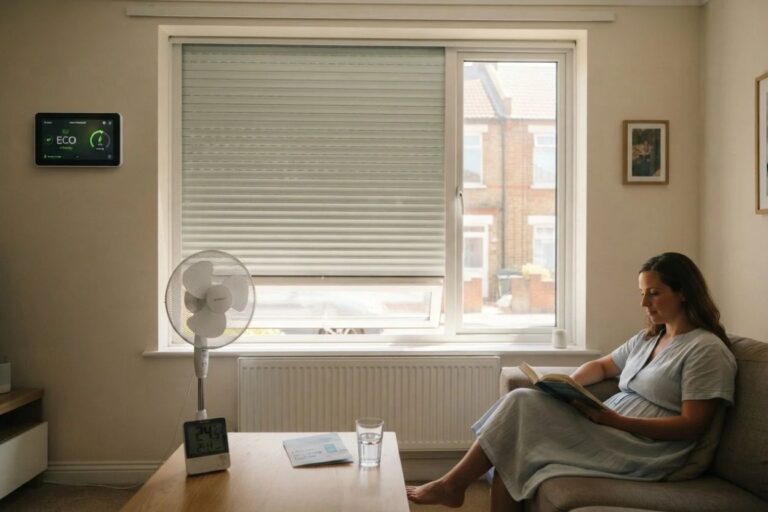
British summers are not what they used to be. Heatwaves that once felt rare now arrive more often, and many UK homes, built to hold on to warmth through long winters, struggle to shed heat when temperatures climb.
Staying comfortable does not have to mean an alarming electricity bill. With a little planning, most households can keep rooms cooler, sleep better and use any cooling equipment far more efficiently.
Why UK Homes Overheat
Much of the UK housing stock was designed with cold weather in mind. Good insulation, double glazing and airtight construction help keep heat in during winter, but they can also trap it in summer once the sun has warmed the building.
Some homes are particularly prone to overheating. Top floor flats, loft rooms, new builds with large windows and rooms facing south or west often become uncomfortable first. Bedrooms that hold the heat of the day can stay warm well into the night, which is when the effect on sleep and health is most noticeable.
For new homes in England, Part O of the Building Regulations now addresses overheating at the design stage, but existing homes need practical fixes.
Start With Free and Low Cost Measures
Before spending money, make the most of simple habits that reduce heat gain:
- close curtains or blinds on sunny windows during the day
- open windows early in the morning and late in the evening, when the air outside is cooler
- create a through draught by opening windows on opposite sides of the home
- switch off lights, chargers and appliances that give off heat when not in use
Light coloured or reflective blinds are more effective than dark curtains, and external shading such as awnings or shutters is better still, because it stops the sun before it reaches the glass.
Choosing Fans and Portable Units
Electric fans are inexpensive to buy and run. They do not lower the temperature of a room, but moving air across the skin makes a noticeable difference to how warm you feel.
Portable air conditioners are the next step up and can cool a single room. They need a hose to vent warm air out of a window, and gaps around the hose let some heat back in, so they are usually less efficient than fixed systems. They can also be noisy, which matters in bedrooms.
Before buying any cooling appliance, check its electrical input in kilowatts rather than just its cooling output, as that figure is what drives your electricity costs.
When Fixed Air Conditioning Makes Sense
For homes that overheat every summer, a fixed split system is often the more practical long-term choice. An indoor unit is mounted on the wall and connected to an outdoor unit, so the noisy parts sit outside.
Modern split systems use inverter technology, which adjusts output to match demand rather than switching fully on and off. Many models can also run in reverse as an air-to-air heat pump, providing efficient heating in winter. Installation involves refrigerant handling, so it must be carried out by an F-gas certified engineer, and electrical work should meet the relevant regulations.
Understanding Running Costs
The cost of running any electrical appliance comes down to how much power it draws and what you pay per unit of electricity. Ofgem sets the energy price cap each quarter, so the unit rate can change through the year, and your own tariff may be higher or lower than the national average.
Air conditioning is often assumed to be ruinously expensive, but the reality depends on the unit, the room and how it is used. Before you buy, it helps to understand what an air conditioning unit costs to run, so you can compare options fairly and set a realistic summer budget. Remember that a unit running flat out uses far more than one simply holding a room at a comfortable temperature.
Simple Ways to Use Less Power
How you use cooling equipment has a big effect on cost. Set a moderate temperature rather than the lowest possible setting, since every extra degree of cooling takes more energy. Use timers or app controls to cool rooms just before you need them, rather than all day.
Keep doors and windows closed while a unit is running, and clean or replace filters regularly so the system does not have to work harder than necessary. Correct sizing matters too. A unit that is too small for a room will run constantly, while one that is too large can cycle inefficiently.
Final Thoughts
Hotter summers are becoming part of life in the UK, and planning ahead is the best way to stay comfortable without bill shock. Start with shading, ventilation and good habits, then consider fans, portable units or a fixed system depending on how often your home overheats. Understanding power use and your electricity tariff before you buy means you can keep cool with confidence when the next heatwave arrives.
