

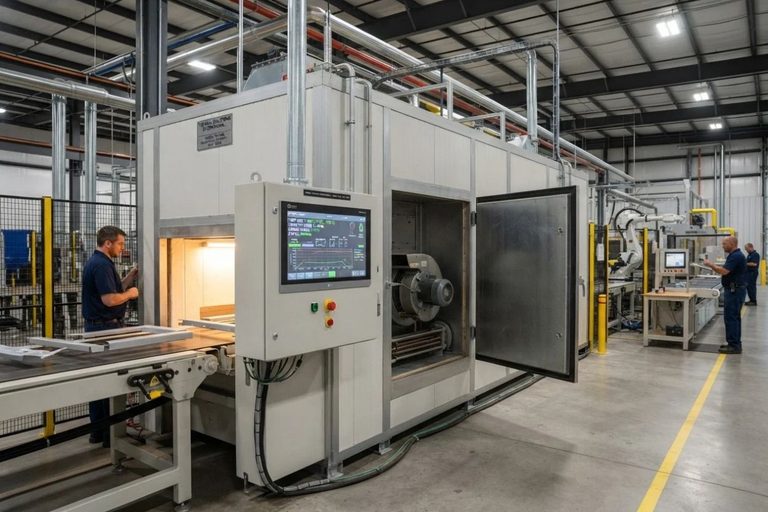
Every manufacturer has a version of the same nightmare. A large order lands, the schedule is tight, and one piece of equipment somewhere along the line decides to stop working. The machines that get the attention are usually the glamorous ones, such as robots and CNC centres. It’s often the quieter equipment, further down the line, that causes the most expensive hold-ups.
Thermal processing is a good example. Anything that has been painted, coated or treated tends to need time at a controlled temperature before it can move on to inspection and packing. If the oven isn’t performing, everything behind it queues up. That’s why decisions about industrial ovens deserve more attention than they usually get in the planning stage of a new line.
Reliability Starts with Unglamorous Equipment
A reliable oven isn’t defined by a single clever feature. It’s the sum of many sensible ones. Robust panel construction, correctly sized fans, well-insulated heater boxes and quality components all contribute to a machine that runs shift after shift without drama.
Hot fan components kept inside the insulated heater enclosure, with motors mounted externally, are a good example of a design choice that reduces wear and heat loss together. Details like this rarely feature in a sales pitch, yet they decide how the equipment behaves in its fifth year of service rather than its first week.
Design That Anticipates Problems
The best-engineered equipment assumes things will occasionally go wrong, and plans for it. Independent over-temperature protection, fan and pressure monitoring and automatic shutdown sequences protect both the product and the plant. A purge cycle before start-up and a controlled cool-down at the end of a shift help to protect the heating components and extend working life.
These features also protect schedules. A machine that shuts itself down safely can usually be restarted quickly. One that fails without warning can mean a lost shift, or worse, a damaged batch of product that was already late.
Documented safeguards help beyond the shop floor, too. Audits, insurance reviews and customer inspections all go more smoothly when a site can show that protection systems exist, work and have been tested. Good design makes that evidence much easier to produce, and it saves managers a surprising amount of time when questions are asked.
Built to Be Changed
Production lines rarely stay the same for long. New products arrive, volumes shift and layouts get reorganised. Equipment built from standardised modules and fully bolted together can be extended, shortened or moved with far less disruption than welded alternatives. It can even be delivered flat-packed, which helps when access to a building is awkward.
Computer-assisted design plays a part, too. Optimising the layout and components for a specific oven size means unusual dimensions needn’t carry an unusual price, which is useful for firms whose products don’t fit standard sizes.
Keeping Operators Informed
Good controls turn a complicated machine into something an operator can run with confidence. Clear displays showing temperature deviation, burner status and fan performance make problems visible early. Programmable options allow weekly time clocks or stepped temperature ramps, and touchscreen versions can make monitoring even simpler. When operators trust the information in front of them, they make better decisions, faster.
Energy Use Is Part of Reliability
A machine that wastes energy tends to be working harder than it should, and that shows up in wear as well as in bills. Dense insulation, air seals on conveyor openings and automatic balancing of combustion air against gas consumption all keep an oven stable at its set temperature without constant correction. Fewer swings mean less stress on components.
Controllers that vary output smoothly, rather than switching heaters fully on and off, give tighter temperature accuracy and use less power doing it. In sectors where product quality is audited, such as aerospace, that stability can be the difference between passing and failing a customer inspection.
Choosing the Heat Source
Gas, oil, electricity and steam are all used to heat process ovens, and the right choice depends on what a site already has in place. Direct-fired systems pass the burner flame into the recirculating air, while indirect systems use a heat exchanger, which keeps combustion products away from the product. Electric heating suits sites with on-site solar or tight emissions targets, and it removes combustion from the equation altogether.
Support After Installation
Even the best equipment needs servicing eventually. The manufacturers who keep lines running tend to be those who’ve thought about spares, service access and engineer support before something fails, not after. Accreditations such as ISO certification, Gas Safe registration and recognised health and safety schemes offer a useful shorthand for how seriously a supplier takes this side of the business.
It’s also worth asking where the equipment is actually designed and built. Suppliers that handle both in house tend to have a clearer picture of how their products perform over time, and they can usually respond faster when a problem needs solving.
The Quiet Contributors
Managing directors rarely talk about their ovens at industry dinners. Yet those machines carry more of a line’s reliability than their profile suggests. When they work properly, nobody notices. When they don’t, everybody does. That’s reason enough to give them a proper look the next time a line is being planned or refreshed.
