

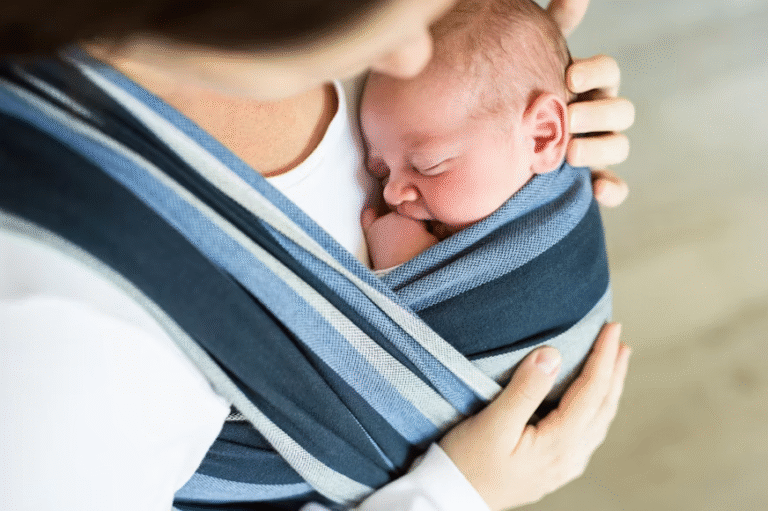
Babywearing gives you a practical way to keep your baby close during everyday routines. Many parents use a sling or carrier during walks, feeding breaks, household tasks, and difficult afternoons. The benefits of babywearing may include faster responses to hunger cues and more chances for close contact.
Research also connects close contact with reduced crying in some babies and higher breastfeeding rates in certain groups. Safe positioning should guide every session from the very beginning. This article explains what evidence tells us and what parents can expect. It also shows how babywearing can support life without relying on exaggerated claims.
Why Babywear?
Your baby depends on adults for warmth, feeding, safety, and regulation. Keeping your baby against your body brings those needs within reach. You notice small hunger signals before crying starts and feeding gets harder.
Babywearing also gives your hands more freedom during lower-risk household tasks. You can prepare a sandwich, fold laundry, or walk outside together. However, avoid cooking heat, hot drinks, knives, ladders, and strenuous exercise.
A well-fitted carrier also spreads your baby’s weight across your torso. Proper adjustment is important because poor fit may strain shoulders or posture.
Babies May Cry Less
Every baby cries, and no parenting tool prevents every difficult evening. Still, increased close contact may reduce total crying for some babies. One randomized trial studied extra daily holding among healthy young infants. At six weeks, babies receiving extra contact cried 43 percent less overall. Evening crying dropped by 51 percent during the same research period.
Reflux, illness, hunger, tiredness, or overstimulation may still cause crying. Yet babywearing gives you another practical response before frustration builds. Your voice, breathing rhythm, warmth, and gentle steps provide familiar input.
Babywearing Bonding Through Daily Contact
Bonding grows through repeated moments of response rather than one perfect routine. Babywearing places your baby near your face during ordinary family activity. Your baby also joins family conversations from a close viewing point. You can notice signals earlier and respond before distress grows larger.
A small randomized study compared soft carriers with infant seats. Researchers included 23 mothers in the carrier group and 26 controls. Carrier-group mothers responded more consistently to their babies’ vocal signals. At thirteen months, more babies showed secure attachment within that group.
This study involved a small group from one specific community. Babywearing cannot guarantee attachment or replace sensitive daily caregiving. However, repeated contact gives parents more chances to learn personal cues. Partners, grandparents, and adoptive parents can share those close interactions too. Partners can use the same routine during walks or household transitions.
It May Support Breastfeeding
Close contact may help you notice hunger before crying disrupts feeding. Early signals include rooting, lip movements, hand sucking, and head turning. Responding sooner can make positioning and latching easier for some families.
A 2021 randomized trial included 100 parents from an income-constrained community. Half received an ergonomic carrier during pregnancy plus instructions for proper use. The remaining parents received the same item after six months. At six months, 68 percent of the early group provided human milk. Only 40 percent of the control group reported the same outcome.
Researchers found no significant group differences at six weeks or three months. Therefore, babywearing should support feeding rather than replace skilled lactation help. Pain, poor weight gain, or latch problems deserve professional assessment promptly.
Feeding inside a sling needs specialized instruction and constant airway monitoring. NHS advice recommends removing babies from slings before breast or bottle feeding. After feeding, return your baby upright with their face fully visible.
Hip Position Deserves Attention
Young hips continue developing during the first months after birth. An ergonomic position supports thighs while keeping knees above the bottom. From the front, your baby’s legs form a wide letter M.
Biomechanical and ultrasound studies suggest this position supports healthy hip alignment. However, researchers have not proven babywearing prevents hip dysplasia across populations. The International Hip Dysplasia Institute describes the evidence as promising but incomplete.
Choose a carrier that supports both thighs rather than dangling legs. Your baby’s knees should rest slightly higher than their bottom. Ask a clinician for guidance after prematurity, hip concerns, or treatment.
Safe Babywearing Comes First
Breathing safety comes before every possible babywearing benefit for families. The TICKS checklist gives parents five memorable safety checks:
● Keep the carrier tight enough to prevent downward slumping.
● Keep your baby’s entire face visible during every use.
● Position the head close enough for an easy kiss.
● Keep the chin away from the baby’s upper chest.
● Support your baby’s back while keeping their body upright.
Check breathing regularly because newborns have limited head and neck control. Remove bulky clothing and watch for overheating during warm weather. Never sleep while wearing your baby inside any sling or carrier. Read the manufacturer’s weight limits before using each position.
Premature babies need extra assessment before regular sling use begins. Low birth weight can change suitable products and safe positioning. A neonatal clinician or trained sling specialist can review your setup.
Start With Ten Practical Minutes
You do not need several hours on your first attempt. Begin with ten minutes after feeding and a fresh nappy. Practice above a bed while another adult checks every buckle. Walk around one room and watch your baby’s breathing closely.
Stop when either person gets uncomfortable or overheated during use. Recheck strap tension because fabric may loosen after several minutes. Small adjustments can improve support without buying another product immediately.
The research does not make babywearing compulsory for good parenting. Some babies prefer shorter sessions and some adults dislike certain designs. Your family can use babywearing when it genuinely helps daily life. Used safely, it offers closeness with practical support during busy days.
