

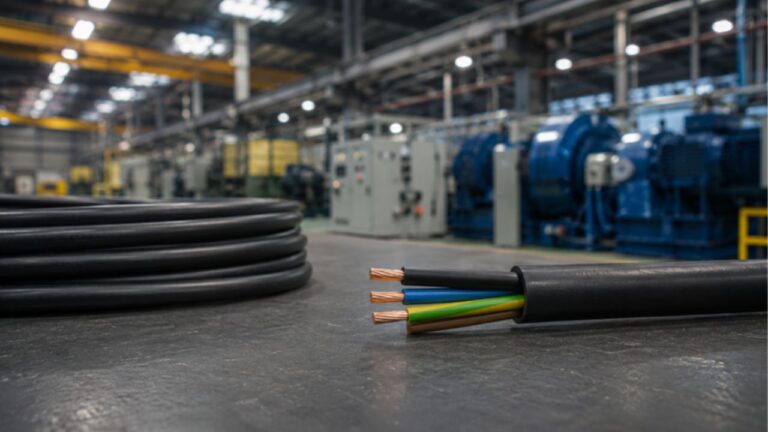
Industrial machinery, commercial equipment, or large electrical systems demand more than just plugging in the correct device. The cable connecting that equipment plays a critical role in maintaining performance and safety. However, using an undersized or low-quality cable can lead to voltage drops, overheating, frequent replacements, and costly downtime.
With the ever-growing power requirements across various industries, selecting a heavy-duty electrical cable capable of handling increased electrical loads has become more critical. Luckily, the optimal choice can enhance performance and safeguard important machinery.
This article outlines the reasons why a heavy-duty electrical cable is important in high-power applications and the reasons why it underpins long-term reliability.
1. Handle High Electrical Loads Without Compromising Performance
One of the best ways to achieve stable and reliable power delivery in demanding environments is to select the appropriate heavy duty electrical cable. Whether it is industrial equipment, a manufacturing system, or a commercial machine installation, a higher electrical load cable will contribute to steady work performance and minimize the threat of power-related problems in the long run.
As opposed to typical cables, heavy-duty cables are constructed using larger conductors and long-lasting insulation that can sustain higher currents. Consequently, power is delivered more effectively, reducing voltage drops that could affect sensitive equipment and overall system performance.
Moreover, numerous high-power installations need bulk wire solutions that are able to support various wire gauges, conductor configurations, and amp ratings. Such flexibility enables professionals to choose a cable that aligns precisely to the electrical specifications of the project rather than to a generic cable that might not adequately address performance needs.
When the cable is appropriate to the application, equipment functions more effectively and has fewer interruptions, which leads to smoother and more reliable operations.
2. Improve Safety In Demanding Work Environments
Electrical safety begins with ensuring the use of job-designed components. Despite the fact that high-power equipment results in high electrical loads, a correctly rated cable can assist in handling such needs without undue stress.
Heavy-duty electrical cables feature robust insulation and construction that can withstand demanding operating conditions. As a result, they help minimize the risk of overheating, insulation damage, and electrical failures caused by excessive current.
Moreover, commercial and industrial uses of cables are usually subjected to constant motion, mechanical pressure, or rough conditions. Durable jackets and good materials offer added resistance to wear and tear and can be used over time to ensure reliable performance.
Correct choice of wire gauge and amp rating also makes installations safer. Professionals have the option to select specifications that meet the electrical requirements of the application, rather than pushing a cable to capacity.
This is a practical measure that helps to protect equipment and ensure safety in the workplace.
3. Deliver Long-Term Reliability and Reduce Maintenance Costs
Constant replacement of cables may disrupt business and raise maintenance costs. Thus, a high-quality heavy-duty electrical cable can prove to be a more cost-effective investment than frequent replacements of the standard cables.
Quality bulk wire solutions are developed to ensure reliable performance throughout long production cycles and continuous operation. Their robust design helps them withstand daily wear and tear, reducing the likelihood of premature failure.
Additionally, high-quality cables can be used to preserve uniform electrical connections, thereby facilitating the proper functioning of motors, machinery, control panels, and other high-power systems. Consistency in power provision can also minimize unneeded stress on the connected equipment, leading to an increased lifespan.
Bulk wire choices are more beneficial in larger installations. Because projects can involve large lengths of cable, buying bulk wire enables contractors and manufacturers to ensure uniformity across the system and to choose the correct gauge and conductor structure to use in each application.
In the long run, this combination of durability and flexibility assists in reducing downtime and aids in making the maintenance schedule more predictable.
4. Support Wide Range Of Industrial and Commercial Applications
Every high-power project has unique electrical requirements that must be carefully evaluated. Some applications prioritize flexibility, while others require specific amp ratings, conductor counts, or insulation materials to function properly. Because of these varying demands, selecting the right cable becomes a critical part of system design and overall performance.
Heavy-duty electrical cables are commonly used across manufacturing facilities, commercial buildings, OEM production, maintenance operations, and specialized electrical installations. Their ability to handle higher electrical loads makes them suitable for equipment that operates continuously or under demanding conditions while maintaining efficiency.
Additionally, bulk wire solutions simplify large-scale projects by providing access to multiple wire gauges and cable configurations. Instead of compromising specifications, professionals can choose products that align with the installation’s performance and safety requirements while maintaining consistency throughout the system.
This level of customization supports efficient planning while ensuring the finished electrical system delivers reliable results from day one and continues to perform effectively over time.
Conclusion
High-power applications require electrical components that deliver consistent performance, dependable safety, and long-term durability. A heavy-duty electrical cable provides the strength needed to handle demanding electrical loads while supporting reliable power transmission across industrial and commercial environments.
At the same time, selecting quality bulk wire with the appropriate gauge, conductor configuration, and amp rating helps create systems that operate efficiently and require less maintenance. This careful selection ensures that electrical systems can handle operational demands without unnecessary strain or risk.
By matching the cable to the application’s specific needs, businesses can improve performance, protect valuable equipment, and build electrical installations designed for lasting reliability.
